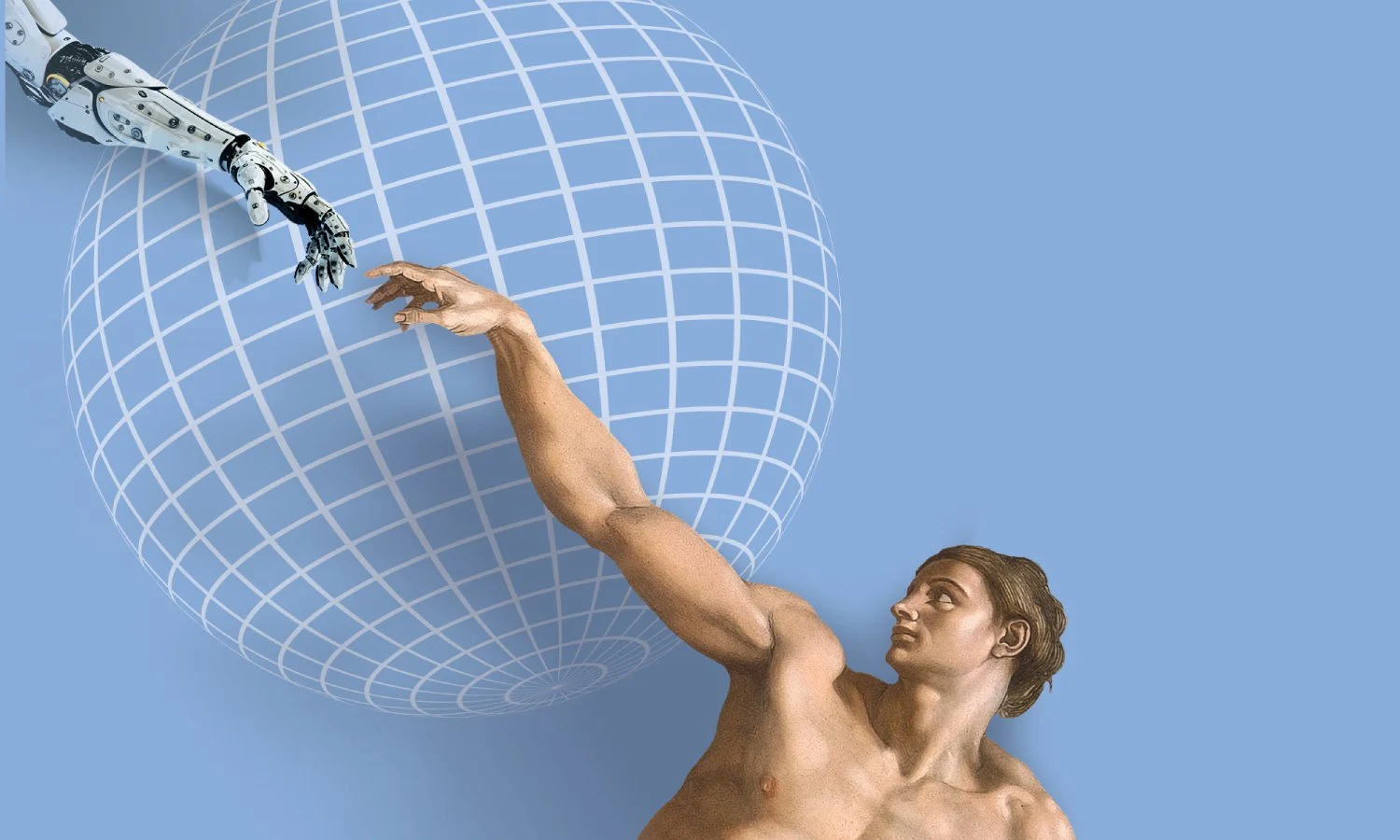

Generative AI chatbots like ChatGPT have become indispensable tools for students across Singapore, helping with everything from essay ideation to concept explanations. But their widespread use raises critical questions about academic integrity and over-reliance on technology. Four Christian students from both local and foreign tertiary institutions share how they navigate school AI policies and draw personal boundaries in using these tools. As AI becomes ubiquitous in education, how can students harness its benefits without compromising the critical thinking skills that make us distinctly human?
Artificial intelligence (AI) comprises a vast range of products with equally numerous applications. The recent years have seen a rapidly growing use of AI in schools, largely in the form of generative AI chatbots. Many students in Singapore would be most familiar with ChatGPT, one such free-to-use AI chatbot. It is an asset for use in academics, aiding in anything from solving problem sums to writing essays. I myself have found it particularly useful in generating ideas, outlines and examples for essays, saving precious time and effort. It can also be used to supplement learning by providing explanations on difficult concepts or providing feedback on writing assignments.
And yet the use of AI in schools has become a source of some contention. It is not difficult to copy and paste entire essays or information for assignments off AI and pass it off as your own work. Not only does this reflect a poor work attitude, but it is also a lost opportunity to develop important soft skills, such as research, critical thinking and creativity. The debate on the use of AI in schools has been further fuelled by incidents at various local institutions. For instance, at NTU, three students were each awarded a zero-mark for their final essays due to their supposed use of AI.1 One of the students rebutted the accusation; the other two admitted to using AI, though only to aid their background research and citation formatting. Meanwhile at NUS, an academic paper was found to contain a hidden prompt intended to sway AI-generated peer reviews, such that they would only be positive.2 As the use and applications of AI burgeon, it comes as little surprise that such charges of misuse are also mushrooming. There are also instances that seem to show, not so much misuse, but missed opportunities, such as the use of AI by some institutions for their open house publicity materials.3
So, as Christian students, how far can we, and should we, use AI in our schoolwork? It can be difficult to draw the line. School rules regarding the use of AI for schoolwork exist, but are not always clear.
What do students say about using AI?
To further investigate this grey area surrounding the use of AI, I asked four Gen Z students from different tertiary institutions and churches to share their views and experiences. All four worship at various Methodist churches in Singapore.

Where are you schooling now, and what are you studying?
Tong Hon Hymn (THH): I’m studying Media, Arts and Design at a local polytechnic.
Grace Loh (GL): I’m a first-year student at a local university, studying Social Sciences.
Zachary Yong (ZY): I am currently studying Law in a university in the United Kingdom.
Josephus Kezia Anu (JKA): I’m currently pursuing a degree in Occupational Therapy at a local university.
What is the usage of AI like among your peers?
THH: The use of AI seems to be a natural reflex for all things, from ideation to final refinement.
GL: I think a lot of people my age use ChatGPT to summarise key ideas when we don’t understand certain concepts.
ZY: I am aware that my peers engage with AI in helping them skim through judgments, journal articles— with some of them even relying on AI to improve their responses to questions in past year papers so that they can better answer similar questions in the exam!
JKA: Right now, the use of AI is so prevalent I think we are using it for almost every little thing. You can call it an increased dependence on the tool. AI chatbots are the most used among my peers, from completing simple tasks, such as summarising an article we have to read for class, to tasks of increased complexity such as coming up with ideas for our sessions with patients/clients during our clinical placements.
Are the school rules on usage of AI clearly articulated?
THH: For my school, the usage of AI is clearly articulated, with different thresholds based on the project. The school also makes every student fill in an AI declaration form when submitting any projects.
GL: Our professors generally want us to declare how we’re using AI, although different professors have different expectations. One of my professors doesn’t even want us to use AI for ideation, whereas another professor is okay with using AI for ideation but not if we copy from it directly.
ZY: The school rules on AI usage are, I feel, quite clearly articulated in a document. Unfortunately, it seems that not many of my peers are made aware of this document, and even fewer read its contents therewith.
JKA: Yes. We have strict guidelines on the usage of AI and it is made clear to all in the University, with reminder emails and information on the guidelines uploaded on each module’s profile.
Where do you personally draw the line in the usage of AI for schoolwork?
THH: I think that in the fields of the arts, AI can be a catalyst to expedite our creative process, but it should not replace our God- given creativity, the very creativity that God used to call his creation “good”. I believe the usage of AI in my schoolwork reflects my character. Am I using AI as an escape to convenience? Would this use of AI limit my creative capabilities or compromise my values? What am I placing my trust on when using AI for this task—in technology or in God? These are some questions I ask myself when drawing the line on my AI usage in schoolwork, and it may be prudent that we start to think of how we can be more intentional in our use of AI, even when the world normalises the excessive use of such technology.
GL: I think it’s okay to use AI but I draw the line when people start using AI as their own brains and stop thinking for themselves—it defeats the purpose of God giving us a brain to understand how things work and limits our ability to ask critical questions.
ZY: Personally, I draw the line where AI compromises on my diligence and integrity. Using AI to draft responses to exam questions and fortnightly assignments is, I think, a misrepresentation because you are essentially passing off someone else’s work as your own. Following from that, I think one disobeys God’s exhortation in Proverbs 10:9, which says, “Whoever walks in integrity walks securely, but he who makes his ways crooked will be found out.”
JKA: I’d say I draw the line at asking AI to create something without any input from me. I make it a point to only use AI so that tedious tasks are made easier for me.
It is important to consider our own use of AI, and come to a personal conviction on how we use it. The last thing we want is to become a generation of students over- reliant on AI, with limited ability to think for ourselves. An American journalist, Sydney J. Harris, rightly commented, “The real danger is not that computers will begin to think like men, but that men will begin to think like computers.”
A loss of the ability to think independently would truly be regrettable. Humans stand apart from AI in that we have a spiritual aspect—a “ruach”—the very breath of God in us. We commune with one another, go through suffering and grow in Christlikeness. AI does not. In allowing AI to think for us, our work loses a part of what makes it human. Yes, AI is unarguably much faster and more efficient than a human can ever be, but there is a certain satisfaction that comes out of putting in our own effort, giving our best in what we do. The making of mistakes, the puzzling out and the fighting through are all part of the joy found in the work God has given us.
Humans stand apart from AI in that we have a spiritual aspect—a “ruach”—the very breath of God in us. We commune with one another, go through suffering and grow in Christlikeness. AI does not. In allowing AI to think for us, our work loses a part of what makes it human.
Ultimately, like any tool, AI can be helpful or harmful depending on how it is used. It would be wise to question our motives for using AI in our work. Is it to enrich our learning? Or is it simply a convenient solution to quickly get a task over and done with? As God’s stewards set over all his creation, we are responsible for how we use AI and what we use it for. At the end of the day, it is the Lord we are accountable to.
1 From A Students’ Prayer (Source unknown)