
The Christian’s lifelong mission is to imitate Christ who came into our world to save sinners, and there are none more so than the prisoner publicly condemned by society. Methodist Message talks to Chua Kok Wan, the Executive Director of Prison Fellowship Singapore about the challenging, multi-layered work of PFS and the indispensable partnership of volunteers, especially with mentally-challenged offenders.
If there is one word to describe prison, it would be “dehumanising”. Stripped of one’s autonomy, with their human liberties curtailed, the incarcerated are deprived of personal space and privacy, surveilled around the clock and must follow enforced routines. Dehumanisation also touches ex-offenders when they are shunned by society for their prison record.
Upholding the rehumanising dictum that everyone deserves a second chance, Prison Fellowship Singapore‘s (PFS) work with prisoners, ex-offenders and their families is founded on Jesus’ words, “… whatever you did for one of the least of these brothers and sisters of mine, you did for me” (Matthew 25:40 NIV).
Holistic care for prisoners and their families
PFS was seeded in 1953 when a Methodist minister, Rev Khoo Siaw Hua, was appointed the first Honorary Chaplain at Changi Prison. The demands of the ministry among the prisoners grew so much that it was formally incorporated as a charity, Rehabilitation Life Limited (RLL), in 1974. In 1985, RLL became a charter member of Prison Fellowship International (PFI) and took the name it bears today—Prison Fellowship Singapore (PFS).
In 2022, PFS moved into its Community Hub at Parish of Christ Church at Dorset Road, a space capacious enough to house its Singapore ministry and PFI’s Asia-Pacific Regional Office.
PFS’ Integrated Ministry framework embodies three-fold, holistic care with different programmes and services refined over the years. 1 “Incare” takes place inside the prison with a weekly chapel service and Bible study in small groups. An average of 76 Incare sessions a week requires 130-150 volunteers to facilitate and teach. “Aftercare” begins when PFS volunteers receive the released prisoners at the prison gate and continue their journey of reintegration into society alongside them. “Family Care” looks after the welfare of offenders’ families, especially the children. This is PFS’ preventive work, as statistics show that approximately 21% of children with one or both parents in prison are likely to enter the system themselves.

The need for community for the mentally-challenged offender
Mr Chua Kok Wan, Executive Director of PFS, highlights their Pre-sentencing Counselling service to first-time offenders who may be susceptible to self-harm due to anxieties such as loss of reputation, shame and regret. These persons may be referred to PFS by the courts, lawyers or church pastors, or may seek help from PFS on their own. Those with a mental health disorder are especially susceptible.
Having been a volunteer with PFS since 2009 before becoming its Executive Director in 2020, Kok Wan is familiar with the ground. With obvious pride, he fluently names several ex-offenders who were helped by PFS and transformed from their time in prison into respectable church pastors, faith leaders and founders of Christian halfway houses.
Their heartening stories contrast sharply with the cases of offenders with some kind of mental health disorder or disability—are they capable of rehabilitation? Will they ever change?
“Offenders’ struggles are not impossible to overcome if they have a community willing to journey with them. A community that befriends the offenders, welcoming them into their church when they are released and ensuring they take their medication regularly, can make a world of difference,” Kok Wan says.

Being the bridge
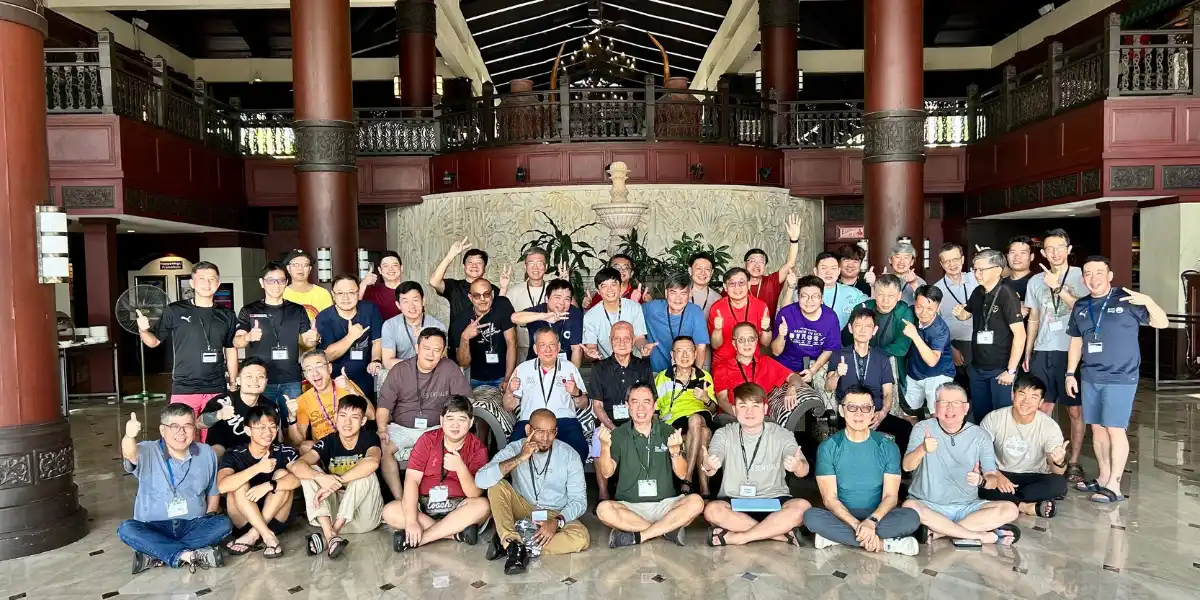
Approximately 10% of the more than 9,000 offenders in Changi Prison register themselves as Christians when they enter the system. Today PFS is one of the largest volunteer-led SSAs to partner the Singapore Prison Service, while also working closely with other SSAs like The Salvation Army, Lakeside Family Centre and others. PFS employs 22 full- time staff and one part-timer, and is heavily reliant on its pool of volunteers. PFS deploys 1,200 volunteers representing 189 churches, though not all are active. Volunteers must commit to a minimum service tenure of one year, which speaks of the high commitment needed to journey with the beneficiaries.
PFS hopes that more volunteers will invite ex-offenders to their church and help them to be assimilated without prejudice into the community. At the Thursday Support Group meetings, volunteers and ex-offenders are intentionally not identified, to model what integration would look like. This seems to work; many attendees were unable to tell apart a volunteer from an ex-offender. Of course, ex-offenders do form their own church peer group at churches with a strong prison ministry.
PFS welcomes the support of every believer from any denomination, whether it is to provide Incare to the offenders in prison, to journey for a time with them after their release, or to run the Care Club for offenders’ children. To be a PFS volunteer the Christian will have to step out of their church door. The mission will not be easy, but then, the Great Commission has always been to go and bring in the harvest.
Lucy Cheng is a member of Wesley Methodist Church and serves as a Sub-Editor with Methodist Message. / Photos courtesy of Prison Fellowship Singapore
1 Forgiven Not Forsaken: Celebrating 70 Years of Prison Ministry in Singapore (1953 – 2023).