At Yong-en Care Centre’s Dementia Day Care in Chinatown, staff go beyond clinical care to honour each client’s story, support weary caregivers, and create moments of joy and connection for those living with dementia.
Bottles of Chinese New Year cookies, goodies and shopping bags lined the tables at a corner of Yong-en’s Dementia Day Care (DDC). Red couplets and lanterns hung above, adding to the festive feel. Some seniors—who might have found crowded shopping malls overwhelming due to mobility and sensory challenges, or who were usually more introverted during centre activities—beamed as they expressed delight at their purchases. At this festive goods stall, they could shop for goodies while being supported by DDC staff. That morning’s specially curated activity brought them a meaningful sense of familiarity and achievement.
Person-centred and compassionate care
Yong-en Care Centre, a community service supported by Fairfield Methodist Church (FFMC), has been an established care and family support provider in Chinatown since 1996, holding IPC charitable status since 2001. Yong-en’s DDC was launched in November 2002 to provide personalised care to persons living with dementia, as well as caregiver support services.
Currently, the DDC team serves 32 clients, many of whom used to work at or live near Chinatown Complex. Person-centred and compassionate care is provided to meet their physical and emotional needs. There are dedicated spaces for group activities, mealtimes, and restful greenery, as well as a calm room for clients who need a quieter, more private space.

Ryp Yong, DDC’s manager, shares their main motivation with Methodist Message.
“We get to know each client well. The recent Chinese New Year shopping activity was one that they could relate to. We want them to be able to participate—to feel valued, knowing they can still contribute.”
Person-centred care also entails a thorough understanding of each client’s general condition and well-being. Trisha Chiara, a Nursing Aide, assesses each client’s physical well-being daily and ensures their safety and comfort by looking out for changes in cognition, communication and behaviour. One of her clients is Mdm Gan, 78.
Trisha explains, “I have cared for Mdm Gan for the past one and a half years. I have witnessed a gradual decline in her cognition and daily functions. She is now unable to understand instructions or effectively communicate her basic needs, and is at the severe stage of dementia. We make sure to offer her maximum assistance when she is walking. I also carefully track her subtle non-verbal cues, such as facial expressions that indicate pain.”
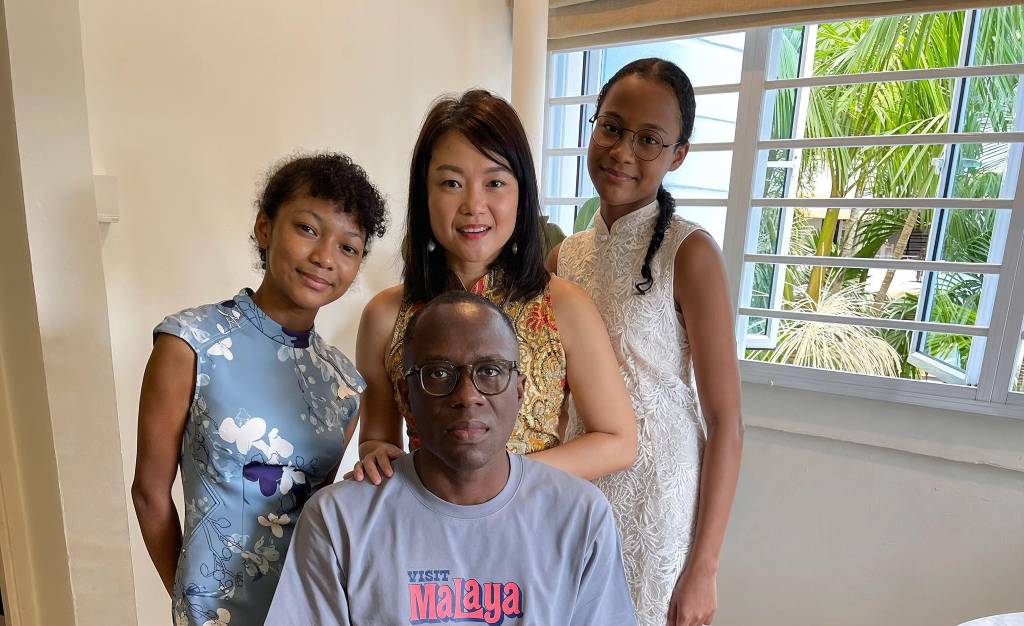
Mdm Gan’s son, Daniel Chiam, worships at FFMC. He first learnt of Yong-en’s services while volunteering at Yong-en Care Centre. Daniel, a business manager, and his siblings are secondary caregivers while his father is the primary caregiver to Mdm Gan.
“Through FFMC and volunteering with Yong-en, I came to know more about their dementia care services. After my parents returned from Australia where they had lived for many years, we felt it would be good for her to interact with others at the day care centre and have a more active lifestyle.”
Ryp highlights the importance of partnering with caregivers as they navigate ongoing challenges through the different stages of dementia, “so they feel more confident and less alone in their caregiving”.
Changes in a client’s condition can also place significant strain on the family. Daniel shares: “This journey has been difficult for all of us, especially my father. Not being able to communicate and chat with my mum as before is very hard. For my father, who used to discuss everything with her, it has been particularly painful. Her attendance at the DDC has given my father some much-needed respite.”
Meaningful experiences and enlivened hearts
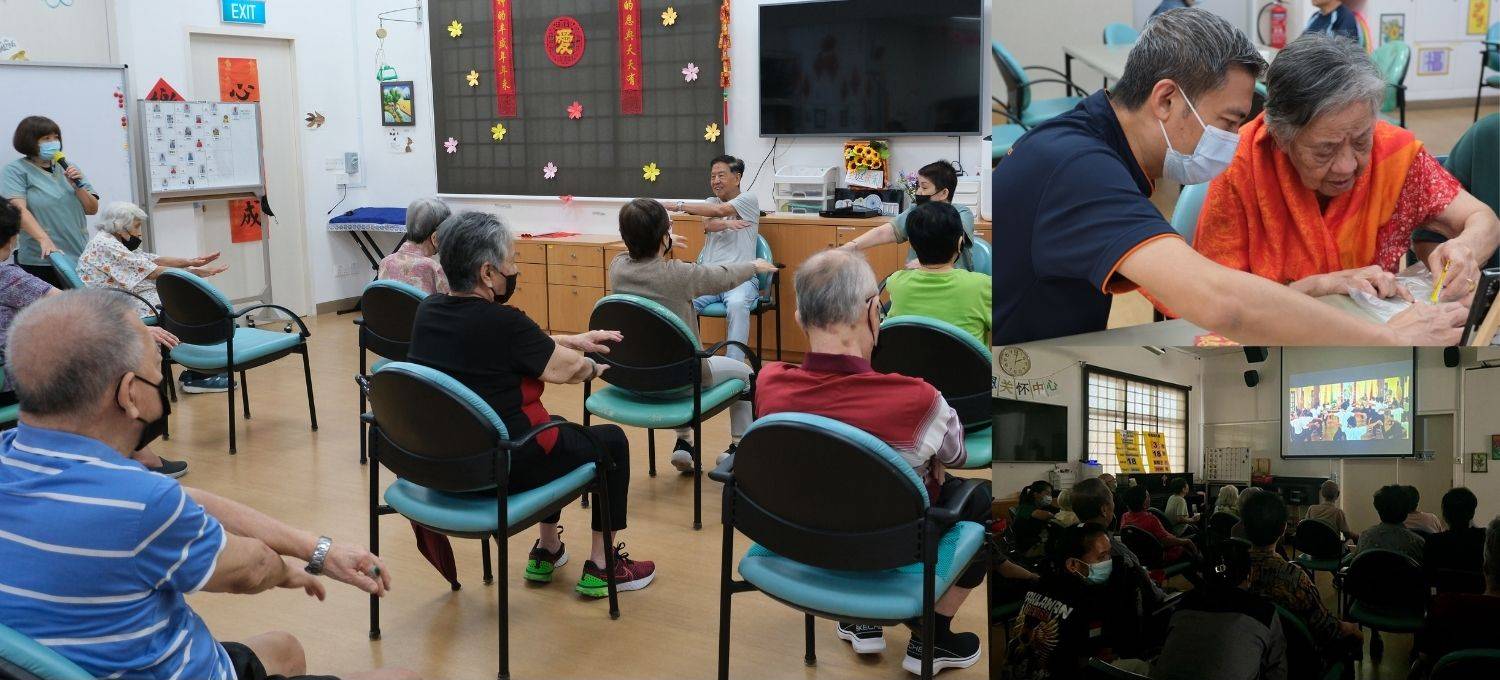
At the centre, it is not always about large-scale programmes. It is more about making space to engage clients in meaningful activities, whatever stage of dementia they are at. Holding supported conversations on familiar topics, for example, often draws animated responses from those who might otherwise remain socially withdrawn due to their communication challenges.

Ryp recalls conversations about past work experiences. “One client was a Traditional Chinese Medicine practitioner. He would often say, ‘You ah, quite weak and low in blood’ and recommend what food I should eat.”
“Another client is a Chinese teacher. During our Chinese New Year idioms activity, she declared that these were all 小儿科—’chicken feed’, far too easy for her!”
Trisha observes that the clients remember who they are and what they are good at.
The DDC staff endeavour to uphold their clients’ dignity through such activities. Ryp says, “We want them to be able to tell their stories. They may forget some things, but they often remember who they are and what they used to do. It is also our wish to affirm their achievements.” The team is planning a Career Day where DDC clients share their life experiences with preschoolers from a nearby kindergarten.
Being attuned to changes in the way clients participate has also enabled staff to adapt activities thoughtfully, making Mdm Gan’s experiences more meaningful and heartfelt.
Trisha says, “Mdm Gan no longer sustains attention during group activities, so we focus more on sensory activities such as doll therapy. She is still able to grip an aqua painting tool with hand-over-hand support, and she responds well to her favourite music.”
Daniel agrees. “I have seen the simple joy in my mother when we listen to familiar Christian songs. She even sings along sometimes!”
Shared moments and new memories that matter
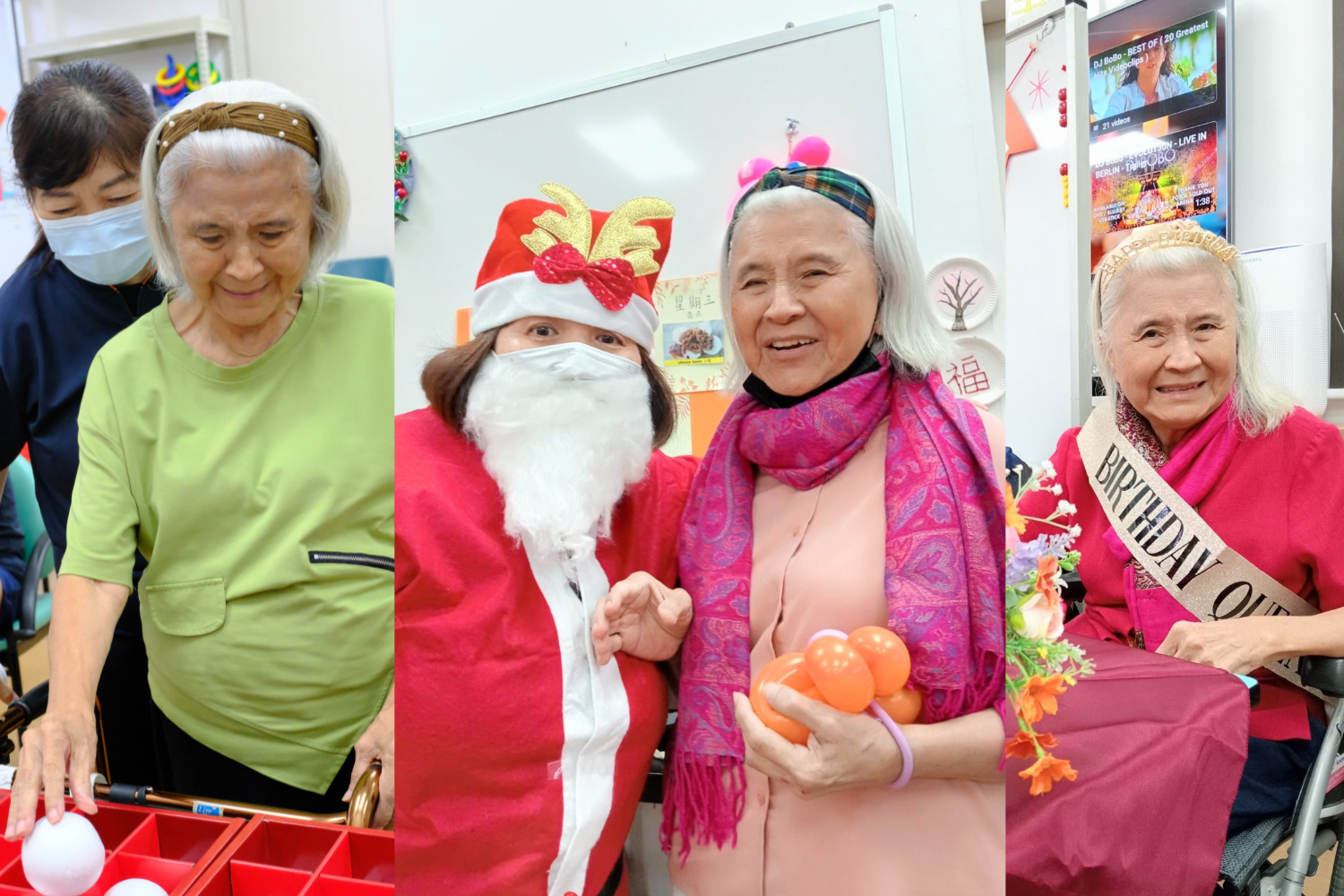
While the day care centre focuses on engaging and enlivening its clients, it is also a place where new memories are created with families through joint activities. Ryp says, “It can be very challenging for caregivers looking after their loved ones in daily life. They may lose sight of love and bonding.”
“We try to bring caregivers in during bigger celebrations like Christmas, and for joint craft sessions or fashion shows. The centre becomes a catalyst for bringing them together—for shared moments between caregivers and their loved ones.”
Photos taken during activities are often sent to caregivers as keepsakes or updates. Daniel says, “It was heart-warming to see my parents enjoying a craft activity together.”
While the day care centre focuses on engaging and enlivening its clients, it is also a place where new memories are created with families through joint activities.
For some caregivers, these shared moments and memories are what matter most. Trisha recalls with tenderness a senior client who passed away recently. “She was so happy in the last photo we took of her—just hours before she passed away that night.”
Ryp adds, “After the funeral, her son came to give us a cake. He was so grateful that we had been part of his mother’s final chapter.”
“He compiled all the photos we had taken of her and created a montage for the funeral. He even printed out that last photo and placed it at her niche.”
As part of its Dementia Care Services, Yong-en Care Centre also provides the Cognitive Intervention Programme (CIP) rolled out by the Agency for Integrated Care (AIC), supporting persons with mild to moderate dementia through structured, multimodal intervention. Participants begin with a seven-week core programme of twice-weekly, three-hour group sessions featuring physical, cognitive and social activities. They may then opt for an optional maintenance phase of up to 26 weeks to help sustain the gains made during the initial phase. For information on their programmes, contact 6225 1002 or mail@yong-en.org.sg.