
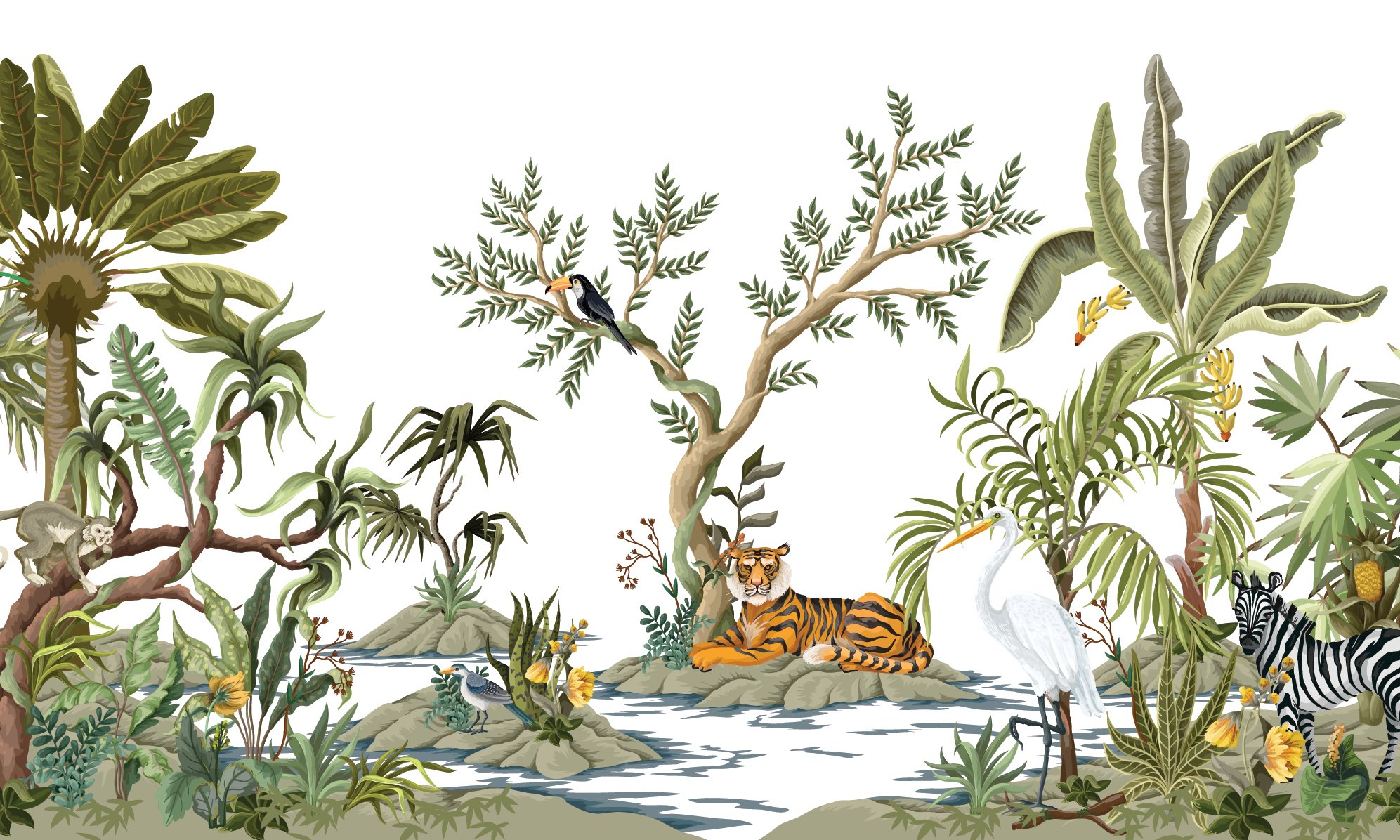
Even a cursory reading of the Bible reveals the important place that non-human animals have in the grand plan of God. The story of creation told in the early chapters of Genesis presents the wonderful diversity of creatures that God brought into being even before the arrival of the human pair.
For example, in Genesis 1:20-21, we read:
And God said, ‘Let the waters swarm with swarms of living creatures, and let birds fly above the earth across the expanse of the heavens.’ So God created the great sea creatures and every living creature that moves, with which the waters swarm, according to their kinds, and every winged bird according to its kind.
Then again, in Genesis 1:24-25:
And God said, ‘Let the earth bring forth living creatures according to their kinds— livestock and creeping things and beasts of the earth according to their kinds.’ And it was so. And God made the beasts of the earth according to their kinds and the livestock according to their kinds, and everything that creeps on the ground according to its kind.
If the original creation is populated by such a staggering variety of non-human animals (and, in fact, also a variety of vegetation as described in Genesis 1:11-12), what about the new heavens and new earth in the eschaton? Will it also be teeming with a rich diversity of non-human animals?
Regrettably, much of Christian discourse about eschatology tends to focus mainly on human destiny, and has therefore somewhat neglected the non-human creatures. Consider our favourite hymns about the afterlife—many are narrowly human-centric in their focus.
A clear example is “When We All Get to Heaven” by Eliza E. Hewitt (1898) which imagines heaven as a realm where redeemed souls are united with Christ and one another. “In the Sweet By and By” (1868) by Sanford F. Bennett makes the same emphasis when it sings of a “beautiful shore” where the faithful will gather after death.
Neglecting to include the non-human animals in the new creation may inadvertently result in a distorted Christian understanding of the future that is to come. It may reinforce old misconceptions that salvation is only extended to human beings created in God’s image.
Neglecting to include the non-human animals in the new creation may inadvertently result in a distorted Christian understanding of the future that is to come. It may reinforce old misconceptions that salvation is only extended to human beings created in God’s image.
Scripture (both the Old and New Testaments), however, presents a different picture. The salvation that God has brought about through the death and resurrection of Christ will bring about the renewal of the whole creation, not just humans.
We find this in the prophecies of Isaiah which envision humans and animals living peaceably with one another in the new creation. The quintessential passage is surely this:
The wolf shall dwell with the lamb, and the leopard shall lie down with the young goat, and the calf and the lion and the fattened calf together; and a little child shall lead them. The cow and the bear shall graze; their young shall lie down together; and the lion shall eat straw like the ox. The nursing child shall play over the hole of the cobra, and the weaned child shall put his hand on the adder’s den. They shall not hurt or destroy in all my holy mountain; for the earth shall be full of the knowledge of the Lord as the waters cover the sea. (Isaiah 11:6-9)
The New Testament echoes the images found in Isaiah. For example, John reports his vision of the redeemed creation thus:
And I heard every creature in heaven and on earth and under the earth and in the sea, and all that is in them, saying, ‘To him who sits on the throne and to the Lamb be blessing and honour and glory and might forever and ever!’ (Revelation 5:13)
The inclusion of non-human animals in the renewed and restored creation is important because it underscores the fact that nothing that God has brought into being was a mistake or a matter of regret. These include creatures that we may find unsettling or dangerous, such as tarantulas, cobras and scorpions, as well as viruses and bacteria.
As the German theologian Jürgen Moltmann puts it, “God forgets nothing he has created. Nothing is lost to him. He will restore it all.”1 However, it was Pope Francis who expressed this eloquently and poignantly in his 2015 encyclical:
Eternal life will be a shared experience of awe, in which each creature, resplendently transfigured, will take its rightful place and have something to give those poor men and women who will have been liberated once and for all (section 243).2
Dr Roland Chia is Chew Hock Hin Professor of Christian Doctrine at Trinity Theological College and Theological and Research Advisor at the Ethos Institute for Public Christianity.
1 Jürgen Moltmann, The Way of Jesus Christ: Christology in Messianic Dimensions (Harper San Francisco 1990), 303.
2 Pope Francis, Laudato Si’. On Care for Our Common Home, May 24, 2015, https://www.vatican.va/content/francesco/en/encyclicals/documents/papa-francesco_20150524_enciclica-laudato-si.html