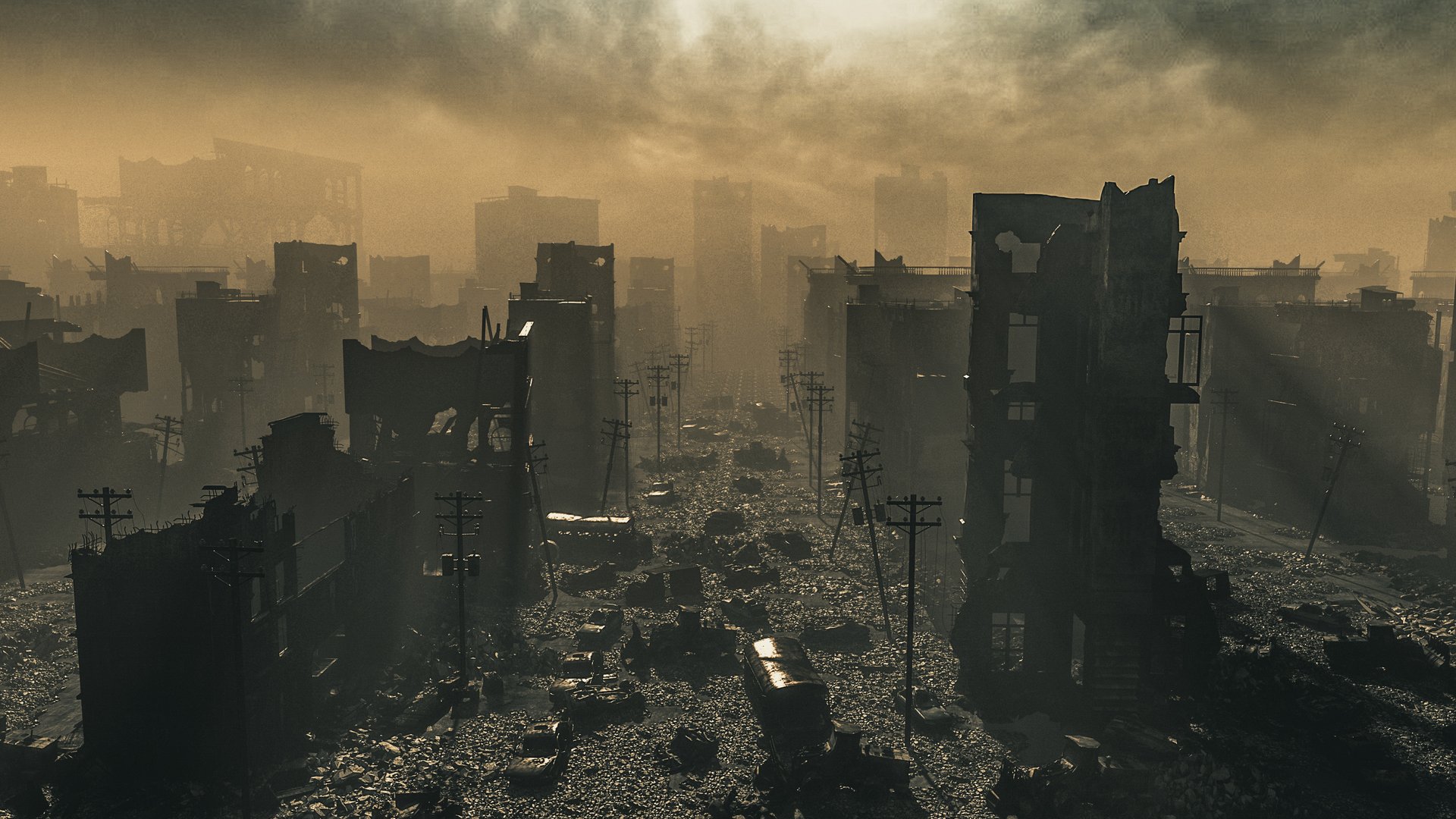
Wars in the Middle East often see a spike in apocalyptic fever, particularly when the conflicts involve Israel. In popular understanding of “the end times”, Christ will return after the cataclysmic battle of Armageddon between an unbelieving world and Israel. Whenever battles rage in the Middle East, prophetic pundits wonder if Armageddon is not imminent.
Interest in prophetic scenarios is something of a cottage industry among prophetic teachers, especially in the United States. Their prognostications influence many in our churches. Notions of rapture, the great tribulation, the anti-Christ, Christ’s millennial rule, etc., are staples in popular eschatological imagination. These are augmented by elaborate charts of prophetic timelines complete with biblical verses.
That Christ will return to earth one day to establish his redemptive kingdom fully and finally is something Christians everywhere believe in. Where they differ is how this will happen, with much of the discussion turning on the interpretation of biblical texts pointing to “the last days”.
Are we living in “the last days”?
In popular prophetic teaching, “the last days” refer to that period immediately preceding Christ’s return, beginning with the rapture of the Church. In this prophetic schema (Dispensationalism), “the last days” are still ahead in the future; and it will be Israel, not the Church, that will experience the tumultuous events of the end times.
Such an interpretation, however, runs up against the New Testament view of “the last days” as having already begun in the earthly ministry of Jesus. Hebrews 1:1-2 says that “in these last days he [God] has spoken to us by his Son.” Peter proclaimed that “in the last days it shall be, God declares, that I will pour out my Spirit on all flesh” (Acts 2:17). The “last days” refer to the period between the Incarnation and the Second Coming. Biblical scholars characterise this period as already-but-not-yet, i.e. the Kingdom of God has already arrived in Jesus, but its consummation is still ahead in the future.
All followers of Christ, whether Jews or Gentiles, now live in “the last days” en route to that climactic last day when Christ shall return. Though this “day of the Lord” is described as imminent and unexpected (1 Thessalonians 5:1-11; James 5:8; 1 Peter 4:7), no one knows, not even the Son, when this will happen, except God (Matthew 24:36, 42).
What are “the last days” like? Jesus’ reply to the disciples’ question on the “sign” of his coming and of the close of the age in Matthew 24:3-4 is instructive. He provides a litany of eschatological signs: the appearance of false messiahs, reports of wars, famines and earthquakes, martyrdom, believers growing cold in their love and falling away, and the gospel preached to the nations, and so on.
As to when these things will occur, we find in Jesus’ reply both a note of imminence and of delay. Jesus has been speaking of the destruction of the temple (Matthew 24:1-2), and the reference to “this generation” not passing away until these things come to pass (v34; cf. 23:36) suggests that these signs will happen in the near future, the forty or so years between the time of Jesus and the fall of Jerusalem in AD 70.
At the same time, references to the coming of the Son of Man and the judgement that follows seem to point to an unspecified period before the end comes. There is thus a sense in which events in the near future are juxtaposed with events in the distant and unspecified future. To make sense of these eschatological signs one needs to appreciate the literary form in which they are couched.
Biblical interpretation and eschatological sign-reading
Interestingly, in speaking of “wars” and “rumours of wars,” the darkening of the sun and moon, and falling stars (Matthew 24:6, 29-30), Jesus is using the language of apocalyptic, a form of writing suffused with symbolic imagery, battles between good and evil, and cosmic upheavals. To interpret these signs in a woodenly literalistic manner is to misunderstand them. The concern is not with chronological exactitude as it is with theological affirmation. It is to reassure believers that despite the convulsions of history and the seeming triumph of wickedness, God is still in control. It encourages believers to be watchful for the certain return of Christ.
To interpret these signs in a woodenly literalistic manner is to misunderstand them. The concern is not with chronological exactitude as it is with theological affirmation. It is to reassure believers that despite the convulsions of history and the seeming triumph of wickedness, God is still in control. It encourages believers to be watchful for the certain return of Christ.
Similarly, the book of Revelation, which prophetic writers often mine to support sensational end-times pronouncements, is not a handbook of predictions but a tract for the times written largely in the style of apocalyptic. To read Revelation as a coded forecast about geopolitics in the twenty-first century is to misconstrue the book.
As American writer Curtis Chang suggests, Revelation is not a crystal ball into which we gaze and see future events. Rather, it is more like an X-ray machine that reveals the inner workings of our world. It draws back the curtains of history as it were to reveal the spiritual realities behind the political machinations and religious miscreancy of not just our times but of all times. It helps us discern the principalities and powers at work in the world and directs our attention to Christ.
So instead of trying to decipher who the anti-Christ is, we learn to discern the ways in which an anti-Christ spirit is at work in our world. Such a spirit manifests itself in duplicity, lawlessness and destruction (2 Thessalonians 2:3). It animates self-serving leaders today who brandish the Bible and speak peace on the one hand but drop bombs and kill thousands callously on the other.
One of the dangers of treating Revelation as a guidebook for global warfare is the politicisation of prophecy by the unscrupulous. We see this in the way military adventurism is framed as a holy war to kill the unrighteous, i.e. political enemies. There is even talk of hastening the Lord’s return by helping to kickstart Armageddon.
Armageddon’s prominence in popular eschatology is in contrast to its meagre place in Scripture. There is only one reference to Armageddon in Revelation 16:16, which speaks of the “kings of the whole world” gathering at Armageddon (from “Har-Megiddo” or Mount Megiddo) to “make war on the Lamb” (Revelation 17:14). There is, however, no description of any actual battle. What follows is the narrative of Christ riding triumphantly on a white horse with his robe dipped in blood. This recalls the image of the “Lamb standing, as though it had been slain” in Revelation 5:5-6. The blood is not the blood of the enemies but of Christ.
When we follow Christ the Lamb in self-sacrificial service, doing justice, loving kindness, and walking humbly with our God, we embody the inbreaking presence of the Kingdom. In so doing, we live out in the here and now, however imperfectly, the life of the world to come. We may not know when Christ will return, but we do know what he has called and commanded us to do: to love God and our neighbours, to live holy lives, to make disciples, and be salt and light in the world. The Church that lives up to her calling becomes an eschatological sign of the end that is in Christ. And we do so praying in our hearts, “Maranatha! Come, O Lord!”
Mark L. Y. Chan is Professor Emeritus of Systematic Theology at Trinity Theological College (TTC). He was formerly the Director of the Centre for the Study of Christianity in Asia (CSCA), a research arm of TTC. He worships with his wife Sophia at Covenant Community Methodist Church.