
Nearly two years into the Israel-Gaza war, how should Christians assess the situation in Gaza, especially Israel’s conduct in the war?
On 3 November 2023, I wrote an article (published in Methodist Message December 2023 issue) on the war in Gaza, subtitled, “A Clarion Call for Moral Clarity.”
In that piece, written less than one month after the conflict began, I argued that following Hama’s attack on Israel on 7 October, Israel had every right to defend itself. However, I added that support for Israel’s right to self-defence could not be unconditional, especially when early indications already pointed to the disproportionate nature of its response.
Even those who support Israel for the right reasons … must recognise the fact that their support cannot be unconditional. Israel’s retaliatory bombardment of Gaza may arguably be seen as going beyond what can be reasonably regarded as self-defence.1
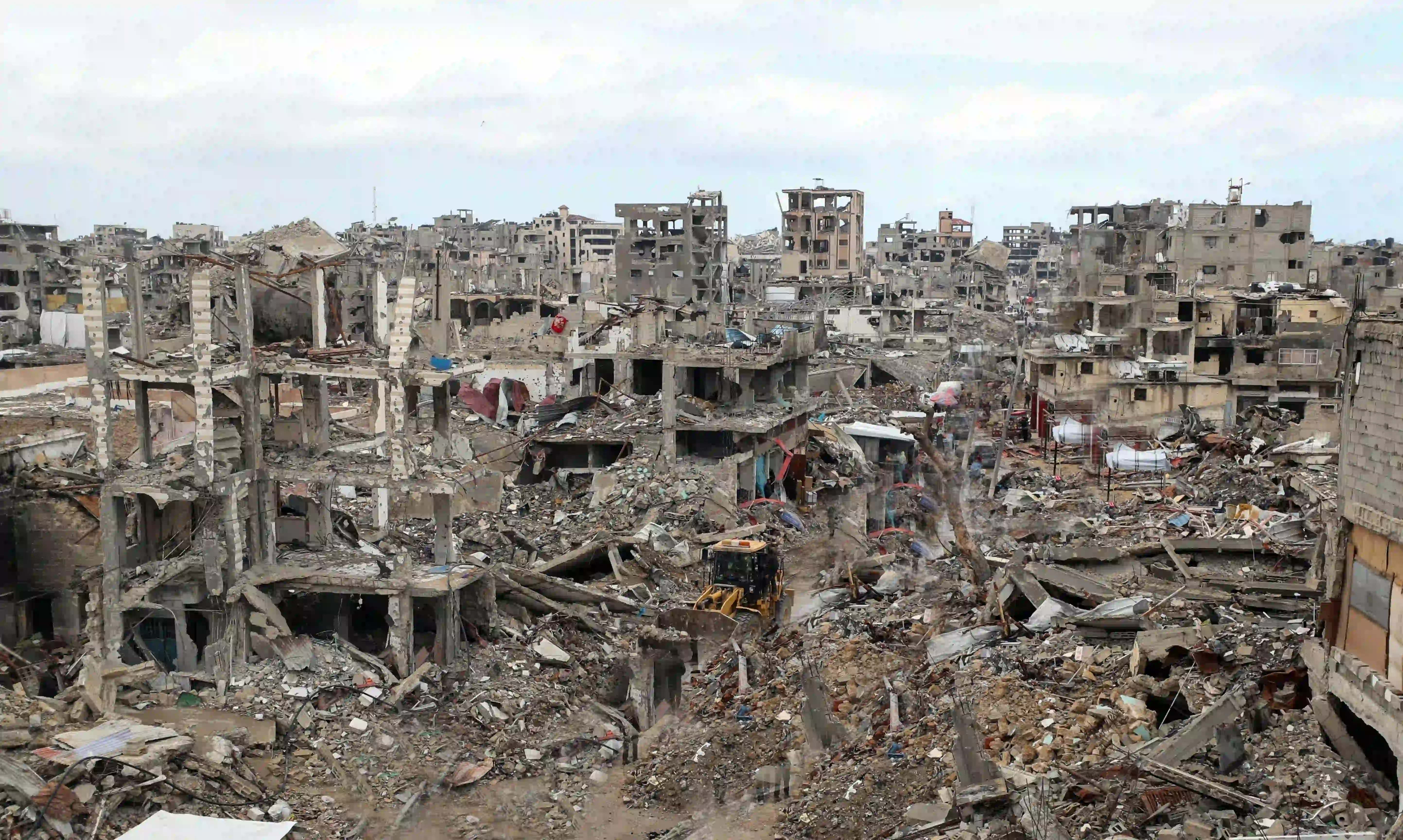
When I penned those words, I could not have imagined the massive loss of lives and widespread devastation that we are now witnessing, nearly two years into the war.
According to the United Nations Office for the Coordination of Humanitarian Affairs (OCHA), as of June 2025, over 58,000 Palestinians have been killed in Gaza.2 The Gaza Ministry of Health estimates that more than 140,000 have been injured since Israeli airstrikes and ground operations began.3
Since the start of the conflict, about 1.9 million Palestinians—over 90 per cent of the population of Gaza—have been displaced4. More than 2 million people—half of whom are children—lack access to sufficient water, food, or medical care.
The destruction of buildings and infrastructure in Gaza has been truly horrific.
About 90 per cent of Gaza’s schools and universities have been damaged or destroyed by Israeli attacks, such as airstrikes, shelling, and controlled demolitions. According to a UN report, Israeli forces have also caused damage to cultural and religious sites in Gaza, estimating that about 53 per cent of heritage sites have been affected.5
Most tragically, Israeli attacks have destroyed hospitals and health facilities that are desperately needed to treat the sick and wounded. On 13 April 2025, Al Jazeera reported that an “Israeli air raid has left the last functioning hospital in northern Gaza non-operational, forcing critically ill patients onto the streets.”6
While Israeli authorities have always claimed that ample aid and food are allowed into the besieged Palestinian territory, aid agencies working on the ground contradict this claim. Oxfam director Scott Paul told CNN that “famine is banging down the door” in Gaza.7 On 23 July, a coalition of more than 100 international humanitarian organisations called on Israel to end its blockade and restore food flow in Gaza.8
In addition, there have been repeated reports of Palestinian civilians being shot and killed by the Israel Defense Forces (IDF) while attempting to access food at distribution points.9
Many agencies and nations have accused Israel of committing war crimes. Are these accusations justified?
How should Christians assess the situation in Gaza, especially Israel’s conduct in the war? In this article, I examine this current conflict through the lens of the Christian just war tradition to reflect on these questions.
This approach to war and peace has a long history in Christianity. It can be traced to the fifth century theologian, Augustine, Bishop of Hippo (354–430), often regarded as the father of the Christian just war tradition. It was formalised by Thomas Aquinas (1225–1274) in the thirteenth century and continues to be developed today by both Roman Catholic and Protestant theologians.
In particular, I attempt in this article to assess Israel’s conduct in the war by using the two principles of the just war tradition, namely, jus ad bellum (justice of war) and jus in bello (justice in war).
I must stress that my evaluation is based on publicly available information about the war. It is possible that my view may change should information currently available only to Israeli authorities come to light.
Justice of war (Jus ad bellum)
With this caveat, we begin with the question of whether Israel has the right to wage war against Hamas—whether, in other words, the war is morally justified. This is the question posed by jus ad bellum, the first principle of the just war tradition.
According to this doctrine, a war may be said to be just only if it has a just cause. This essentially means that it must be shown that the war in question is fought in order to resist aggression and protect the innocent. Furthermore, it must also be shown that the reasons for waging war are weighty enough to override the prima facie duty not to kill or injure others.
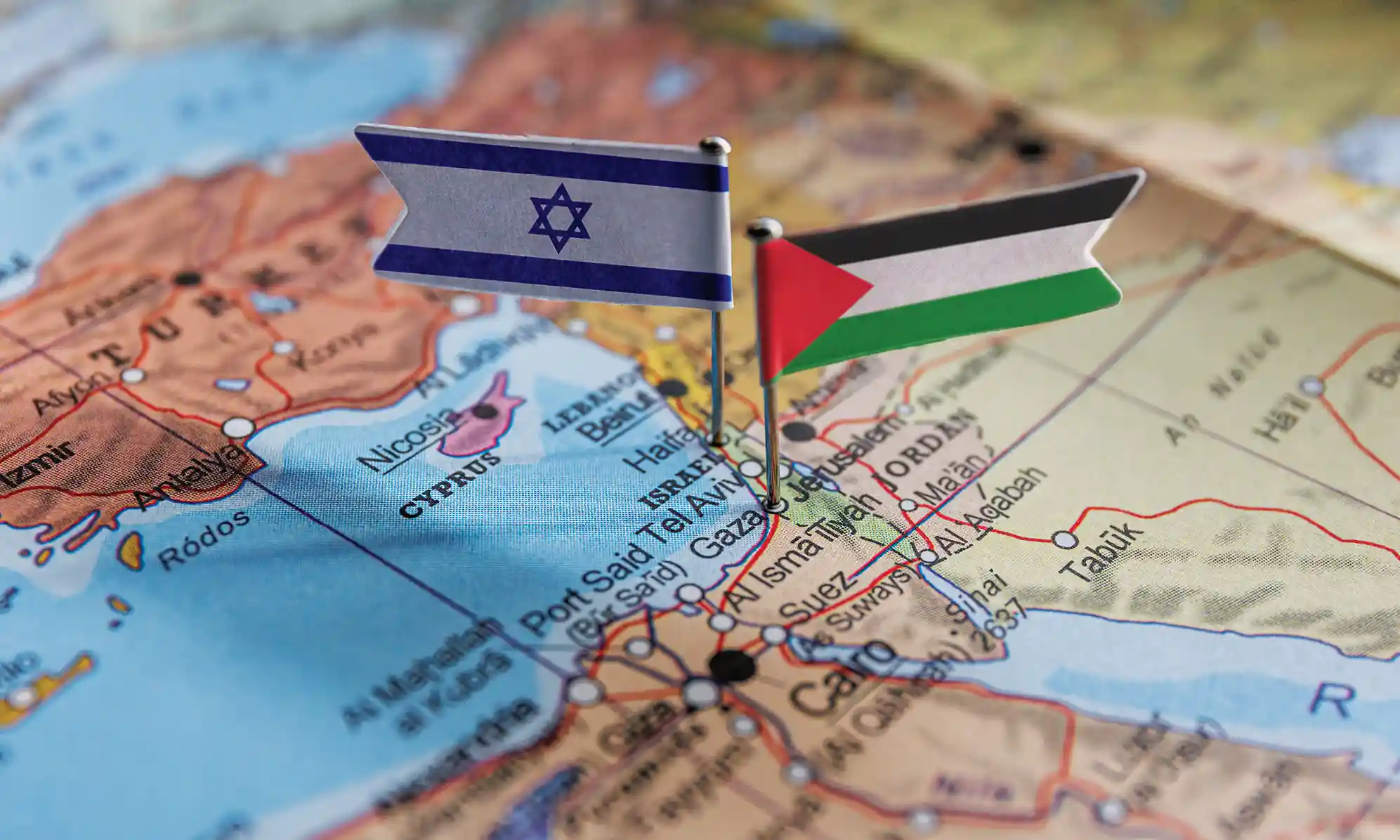
As far as the current war between Israel and Hamas is concerned, many Christian ethicists argue that Israel indeed has the right to defend itself after the horrific attacks by Hamas on 7 October 2023. They also hold that on the principles of the just war tradition, Hamas’ attack can never be morally justified.
As the eminent British Christian ethicist, Nigel Biggar, puts it:
Whatever injustices Palestinian Arabs have suffered, whatever one thinks about the Israeli settlements on the West Bank, and however one judges the government of Benjamin Netanyahu, the intentionally and sadistically indiscriminate slaughter of more than 1,100 men, women and children on October 7 had not moral justification in the eyes of the ‘just war’ tradition. Accordingly, Israel was clearly justified in taking military action to defend its people by rendering Hamas incapable of repeating what it did.10
At one level, the jus ad bellum analysis of Israel’s war in Gaza is quite straightforward: Israel suffered a horrific terrorist attack—arguably the worst in its history—and has responded militarily to prevent future attacks.
Israel’s response, as Biggar has rightly pointed out, is morally justified. This is a view that I concur with and continue to hold.
However, jus ad bellum also calls for other important considerations. When these are examined closely and carefully, the claim that Israel’s war in Gaza is just becomes significantly less clear.
According to the doctrine, a war is just if its aims are clear, if there is reasonable chance of success, and if there is a genuine hope for peace.
The Israeli government has two aims for their present war in Gaza. The first is to secure the return of the hostages abducted on 7 October, and the second is the systematic destruction of the military and political capacity of Hamas in Gaza.11
While the first goal is attainable—and to some extent already achieved—the second is far more ambitious. Some analysts opined that it is unrealistic as a complete outcome, even though it is partially achievable militarily.
Hamas is so deeply embedded in Gaza’s entire civilian infrastructure—hospitals, schools, tunnels under urban areas—that their total destruction would cause massive civilian casualties, which is precisely what we are presently witnessing. Additionally, Hamas is more than just a terrorist group. It is also a resilient social movement and ideology which cannot be fully eradicated by military force alone.
History has shown that similar attempts to defeat terrorist groups such as the Taliban, al-Qaeda and ISIS have only limited success if the political and social roots of the conflict are not addressed.
Thus, while the second goal may be regarded as justifiable, in terms of jus ad bellum, the crucial question is whether Israel indeed has a reasonable prospect of success in achieving it militarily.
Justice in war (Jus in bello)
The most challenging task is the assessment of Israel’s conduct in the war, given the extent of its ongoing military campaign that has resulted in widespread destruction and the displacement of most of Gaza’s population. As Patrick Wintour of The Guardian puts it very early in the conflict:
The destruction of more than a third of Gaza’s homes as Israel bombards the territory in pursuit of Hamas is leading international legal experts to raise the concept of ‘domicide’ – the mass destruction of dwellings to make the territory uninhabitable.12
According to a May 2025 BBC report, the EU Commission President Ursula von der Leyen described the attacks on Gaza’s civilian infrastructure as “abhorrent” and “disproportionate”.13
Have Israel’s military actions been excessive and disproportionate? This question brings us to the second major consideration of the just war doctrine, namely, justice in war (jus in bello).
Two principal concerns are addressed here: discrimination (sometimes referred to as “distinction”) and proportionality.
Discrimination asks whether non-combatants are directly or intentionally attacked in the war—recognising of course that there may be accidental casualties or collateral damage. And proportionality has to do with the evaluation of civilian casualties through the lens of military necessity.
Assessing whether military actions are discriminatory or proportionate is a task that is always inherently challenging. This is even more so in the Israel-Hamas war which is fought in a densely populated area, and where Hamas militants strategically co-mingle with the general population.
The Laws of War do not categorically forbid the killing of civilians as such although they do prohibit the intentional targeting of civilians and attacks that cause excessive civilian harm. For example, Geneva Convention 4, Article 28 states that “The presence of a protected person may not be used to render certain points or areas immune from military operations.”14
However, Article 29 goes on to state that the military force which deliberately co-locates military targets with civilians or civilian infrastructure is guilty of war crime. This means that Hamas is legally responsible for the deaths of civilians because it has deliberately built its military infrastructure to be co-located in schools, hospitals and civilian homes.
Assessing whether Israel’s military operations that have caused the death of so many Palestinian civilians is proportionate and therefore defensible is difficult for another reason. According to just war theory, proportionality must not only be ascertained by the death toll or the number of casualities, but by the intention of the military actor.
To be sure, the focus on intention is indeed noble and philosophically sophisticated because it does not reduce proportionality to merely a calculus of costs and benefits but insists that it is a moral evaluation. The challenge here is to discern the true intentions of the political or military actor, since intention is an interior act, often accessible only to the one who forms it.
There is also the possibility of duplicity on the part of the military actor where the real intention is at odds with the stated purpose. And there is also the phenomenon of mixed intentions where a political actor has the genuine desire to protect national security while also seeking political gain.
Despite these difficulties in ascertaining disproportionality in war based on the jus in bello principle, there is a growing chorus of voices which is unequivocal in its belief that Israel’s actions are indeed disproportionate.
On 12 February 2024, UN Human Rights Commissioner Volker Turk strongly condemned Israel’s actions in the Gaza Strip calling them “disproportionate.”15 In the same month, Italian Foreign Minister Antonio Tajani told public broadcaster RAI’s Radio1 that “[a]t this point, Israel’s reaction is disproportionate, there are too many victims who have nothing to do with Hamas.”16
Singapore’s leaders are of the same opinion. On 20 March 2024, Channel News Asia (CNA) reported that Singapore’s Minister for Foreign Affairs Vivian Balakrishnan told Israel’s leaders that Israel’s “actions in Gaza have ‘gone too far’”.17 At a news conference with French President Emmanuel Macron during his state visit to Singapore on 30 May 2025, Prime Minister Lawrence Wong said that “Israel’s response has gone too far and its actions have caused terrible humanitarian disaster …”18
Christian leaders have also described Israel’s actions as unacceptable and disproportionate. On 29 September 2024, Associated Press reported that Pope Francis had described the Israeli attacks in Gaza as “immoral” and “disproportionate”. After his visit to Gaza in July 2025, Cardinal Pierbattista Pizzaballa, Latin Patriarch of Jerusalem, described Israel’s policy as unacceptable and morally unjustifiable.20
These views, expressed so emphatically by world leaders, global intergovernmental organisations such as the UN, and Christian leaders, simply cannot be ignored when assessing the justifiability of Israel’s conduct in this war.
There is another factor that we cannot ignore.
For many years, world leaders, academics and media alike have used the concept of collective punishment to describe Israel’s policy concerning the Palestinians in Gaza. In an article published by The New Yorker in 2014, Rashid Khaldi explains that:
Punishing Palestinians for existing has a long history. It was Israel’s policy before Hamas and its rudimentary rockets were Israel’s bogeyman of the moment, and before Israel turned Gaza into an open-air prison, punching bag, and weapons laboratory.21
Six months into the Israel-Hamas war, UN Chief Antonio Guterres said that Israel’s military campaign in Gaza has brought “relentless death and destruction” to Palestinians, adding that “nothing can justify the collective punishment of the Palestinian people.”22
There are numerous examples of Israel’s actions that indicate that the accusation that it is inflicting “collective punishment” on the Palestinians in Gaza is not unwarranted. These include:
- The seizure of essential supplies, the setting up of blockades to cut off food, water, fuel and medicine. These measures were taken to deny necessities at scale, targeting the entire civilian population.23
- The closing of crossings which led to the delay of the entry of relief. This hampering of aid has led to enforced starvation on the population. The United Nations’ emergency relief coordinator said that this amounts to ‘cruel collective punishment.’24
- The large-scale destruction of infrastructure such as healthcare, water and electricity results in the obliteration of systems essential to survival.25
- The withholding of deceased relatives’ remains which inflicts collective trauma and dishonour on families.26
This has led UN High Commissioner for Human Rights, Volker Türk, Aid Organisations such as Human Rights Watch (HRW) and over 100 NGOs to accuse Israel of subjecting Palestinians in Gaza to collective punishment.
Has Israel crossed the line?
Based on the above considerations, it is difficult to avoid concluding that Israel’s military and other actions in Gaza are indeed excessive, disproportionate and inhumane—signalling possible ethical failure and a broader moral collapse.
Beyond the rubble
Much more can be said about this devastating war from the Christian perspective. However, as I bring this brief article to its conclusion, I would like to reflect on how Christians (and indeed all people of faith) should pray and work towards a just and lasting peace.
In order to do this, Christians must be morally and factually objective in assessing Israel’s conduct in Gaza. They must not allow certain theological views about Israel’s significance to cloud their moral judgement and obscure moral clarity. Moral objectivity requires Christians to be just and impartial (Deuteronomy 16:19–20) and show compassion to the suffering (Matthew 5:43–48).
Christians must be morally and factually objective in assessing Israel’s conduct in Gaza. They must not allow certain theological views about Israel’s significance to cloud their moral judgement and obscure moral clarity.
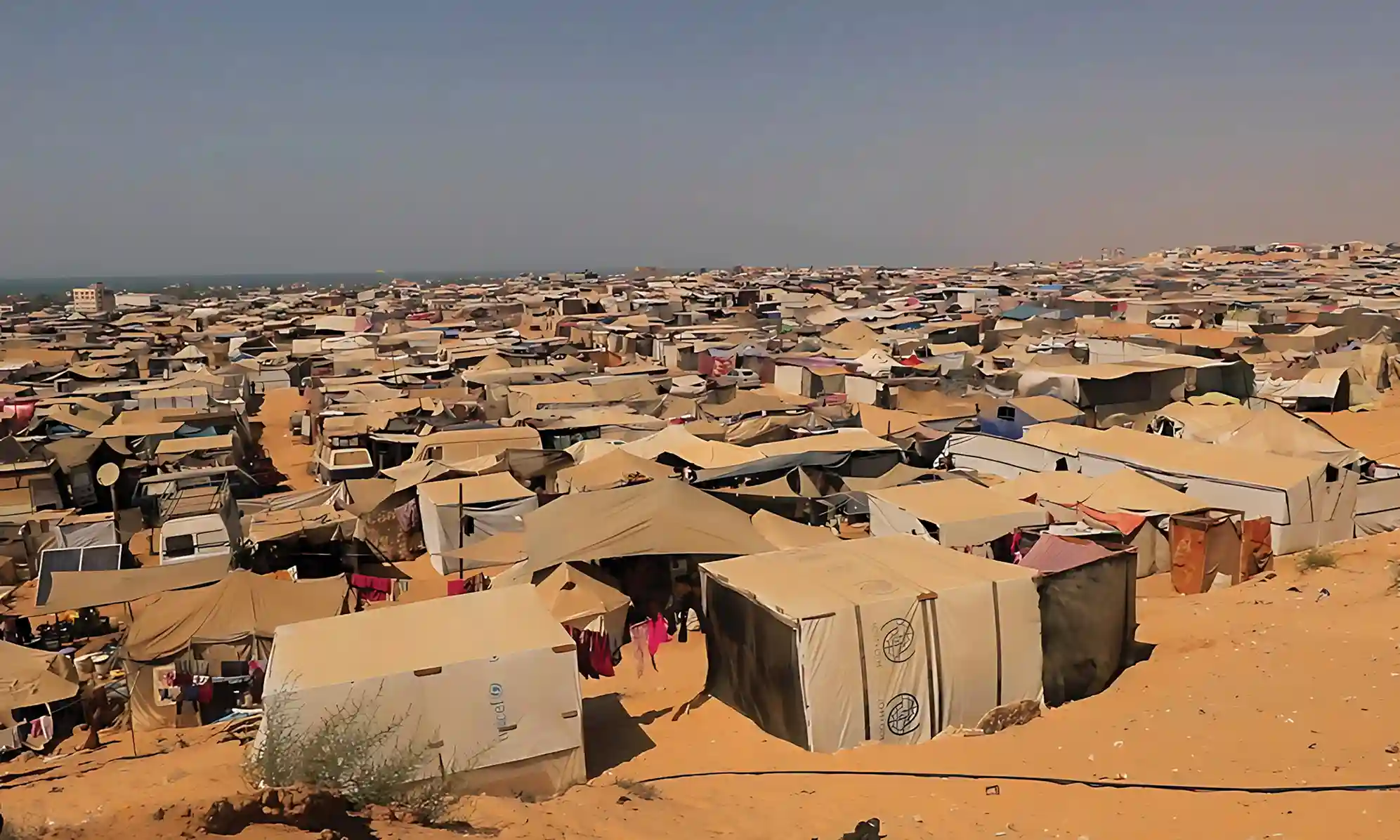
At this stage of the war, the best approach moving forward is perhaps not more military action, but a strategy based on regional diplomacy, moral accountability and a long-term vision for a just peace. This would involve an unconditional ceasefire to be implemented as soon as possible and for the free flow of aid into Gaza to attend to the pressing needs of the starving population.
To pave the way for lasting peace, Israel and relevant stakeholders must realise that their vision of the total military defeat of Hamas and the subjugation of Gaza is not only unrealistic but morally problematic. This is a political conflict which requires a political solution.
The most viable path to peace—as many countries, including Singapore, have long proposed—is a two-state solution. Renewed efforts must be made to promote this by international mediators such as the United States, European Union, Egypt and Qatar—all of which support the two-state solution.
War—even if be “just”—is always a tragedy and an evil. War is not simply a clash between armies. It is always a tragic assault on the dignity of human beings—men, women, children, the unborn—who are created in the image of God (Genesis 1:26–27).
War reveals our broken humanity. War is not only the result of human sin, but also its multiplier—it causes fear, hatred, revenge, deception, and cruelty to flourish in its wake.
There is a profound sense in which we are all losers in war—there are no true winners. For the Christian, war must always be met with sorrow, lament and repentance.
This article was first published on the ETHOS Institute of Public Christianity website on 30 July 2025. It is republished with permission.
Dr Roland Chia is Chew Hock Hin Professor of Christian Doctrine at Trinity Theological College and Theological and Research Advisor at the Ethos Institute for Public Christianity.
1 Roland Chia, “Hamas-Israel War: A Clarion Call for Moral Clarity,” Ethos Institute for Public Christianity, November 3, 2023, https://ethosinstitute.sg/hamas-israel-war-a-clarion-call-for-moral-clarity/.
2 “Reported Impact Snapshot: Gaza Strip (25 June 2025),” United Nations Office for the Coordination of Humanitarian Affairs, June 25, 2025, https://www.ochaopt.org/content/reported-impact-snapshot-gaza-strip-25-june-2025.
3 Yohannes Lowe, “Palestinian Health Ministry Says 73 People Killed While Waiting for Aid in Gaza – as It Happened,” The Guardian, July 20, 2025, https://www.theguardian.com/world/live/2025/jul/20/syria-sweida-middle-east-israel-latest-live-updates.
4 “Crisis in Gaza: What to Know and How to Help,” Rescue.org, June 26, 2025, https://www.rescue.org/crisis-in-gaza.
5 “Report of the Independent International Commission of Inquiry on the Occupied Palestinian Territory, Including East Jerusalem, and Israel (A/HRC/59/26),” United Nations, May 6, 2025, https://www.un.org/unispal/document/report-of-the-independent-international-commission-of-inquiry-on-the-occupied-palestinian-territory-including-east-jerusalem-and-israel-a-hrc-59-26/.
6 “Timeline: Israel’s Attacks on Hospitals throughout Its War on Gaza,” Al Jazeera, April 13, 2025, https://www.aljazeera.com/news/2025/4/13/timeline-israels-attacks-on-hospitals-throughout-its-war-on-gaza.
7 Catherine Nicholls and Antoinette Radford, “Gaza Starvation Warning as Aid Agencies Urge Israel to End Blockade,” CNN, July 24, 2025, https://www.cnn.com/world/live-news/gaza-famine-israel-offensive-07-23-25.
8 “More than 100 Aid, Rights Groups Call for Action as Hunger Spreads in Gaza,” CNA, July 23, 2025, https://www.channelnewsasia.com/world/gaza-hunger-more-100-aid-rights-groups-call-action-israel-hamas-war-5252996.
9 Yolande Knell and Jack Burgess, “Israeli Forces Kill 67 Palestinians Seeking Aid in Northern Gaza, Hamas-Run Ministry Says,” BBC News, July 21, 2025, https://www.bbc.com/news/articles/c8rp62480r3o.
10 Nigel Biggar, “All Things Considered. Making Moral Sense of the Wars in Ukraine and Gaza,” The Centre for Independent Studies, June 27, 2024, https://www.cis.org.au/publication/all-things-considered-making-moral-sense-of-the-wars-in-ukraine-and-gaza/
11 IANS, “Defeating Hamas Is Israel’s Primary Objective: Benjamin Netanyahu,” National Herald India, May 2, 2025, https://www.nationalheraldindia.com/international/defeating-hamas-is-israels-primary-objectivebenjamin-netanyahu.
12 Patrick Wintour, “Widespread Destruction in Gaza Puts Concept of ‘Domicide’ in Focus,” The Guardian, December 7, 2023, https://www.theguardian.com/world/2023/dec/07/widespread-destruction-in-gaza-puts-concept-of-domicide-in-focus.
13 Rachel Hagan, “EU Says Israeli Strikes in Gaza ‘go beyond What Is Necessary’ to Fight Hamas,” BBC News, May 28, 2025, https://www.bbc.com/news/articles/cj937k0wg3do.
14 “Article 28 – Treatment II. Danger Zones,” International Humanitarian Law Databases, accessed July 31, 2025, https://ihl-databases.icrc.org/en/ihl-treaties/gciv-1949/article-28.
15 “UN Rights Chief Calls Israel’s Actions in Gaza Strip as ‘Disproportionate,’” WAFA News Agency, February 12, 2024, https://english.wafa.ps/Pages/Details/141580.
16 Giada Zampano, “Italy’s Foreign Minister Says Israel’s Treatment of Palestinian Civilians ‘Disproportionate,’” Anadolu Ajansı, February 13, 2024, https://www.aa.com.tr/en/europe/italy-s-foreign-minister-says-israels-treatment-of-palestinian-civilians-disproportionate/3136183.
17 “Vivian Balakrishnan Meets Netanyahu, Tells Israeli Leaders Military Actions in Gaza Have ‘Gone Too Far,’” CNA, March 20, 2024, https://www.channelnewsasia.com/singapore/vivian-balakrishnan-israel-working-visit-immediate-humanitarian-ceasefire-gaza-netanyahu-4208726.
18 Charmaine Jacob, “Israel May Be Breaching International Law by Restricting Humanitarian Aid to Gaza: PM Wong,” CNA, May 30, 2025, https://www.channelnewsasia.com/singapore/israel-may-be-breaching-international-law-restricting-humanitarian-aid-gaza-pm-wong-5160066.
19 Nicole Winfield, “Pope Francis Suggests Israel’s Actions in Gaza and Lebanon Are Immoral and Disproportionate”, https://apnews.com/article/pope-israel-lebanon-hezbollah-72b592696627d1a671e7419e98e354b6.
20 Emma Graham-Harrison, “Cardinal Calls Israel’s Policy in Gaza ‘Morally Unjustifiable’ after Visit,” The Guardian, July 22, 2025, https://www.theguardian.com/world/2025/jul/22/cardinal-pizzaballa-gaza-visit-israel-criticism.
21 Rashid Khalidi, “Collective Punishment in Gaza,” The New Yorker, July 29, 2014, https://www.newyorker.com/news/news-desk/collective-punishment-gaza.
22 “Israel Has Brought ‘Relentless Death and Destruction’ to Gaza: UN Chief,” Al Jazeera, April 5, 2024, https://www.aljazeera.com/news/2024/4/5/israel-has-brought-relentless-death-and-destruction-to-gaza-un-chief.
23 3-Week Gaza Aid Ban ‘Collective Punishment’: UNRWA Chief,” The United Nations Office at Geneva, March 23, 2025, https://www.ungeneva.org/en/news-media/news/2025/03/104673/3-week-gaza-aid-ban-collective-punishment-unrwa-chief.
24 Elena Becatoros and Wafaa Shurafa, “UN Official Calls Israel’s “Gaza Aid Blockade ‘Cruel Collective Punishment,’” PBS News, May 1, 2025, https://www.pbs.org/newshour/world/un-official-calls-israels-gaza-aid-blockade-cruel-collective-punishment.
25 John Feffer, “The Obscenity of Collective Punishment in Gaza,” Institute for Policy Studies, May 7, 2025, https://ips-dc.org/the-obscenity-of-collective-punishment-in-gaza.
26 “‘Collective Punishment’ – Israel Withholds 500 Bodies of Palestinian Detainees,” The Palestine Chronicle, May 3, 2024, https://www.palestinechronicle.com/collective-punishment-israel-withholds-500-bodies-of-palestinian-detainees.
27 ibid
28 “Israel Still Blocking Aid to Civilians in Gaza: Collective Punishment of Palestinians Is a War Crime,” Human Rights Watch, October 23, 2023, https://www.hrw.org/news/2023/10/23/israel-still-blocking-aid-civilians-gaza.
29 Julian Borger, “Israeli Block on Aid Raises Health Fears for Gaza’s Undernourished Population,” The Guardian, March 2, 2025, https://www.theguardian.com/world/2025/mar/02/halting-aid-to-gaza-is-aimed-at-giving-israel-upper-hand-in-talks-with-hamas.