
Earlier this year, I attended Finding Your Place (FYP), a 3-month youth discipleship programme organised by the Chinese Annual Conference (CAC) Board of Youth Ministry (BOYM). Out of the many lessons, one that spoke to me was the session on common worldviews, in particular learning about the Singapore worldview.
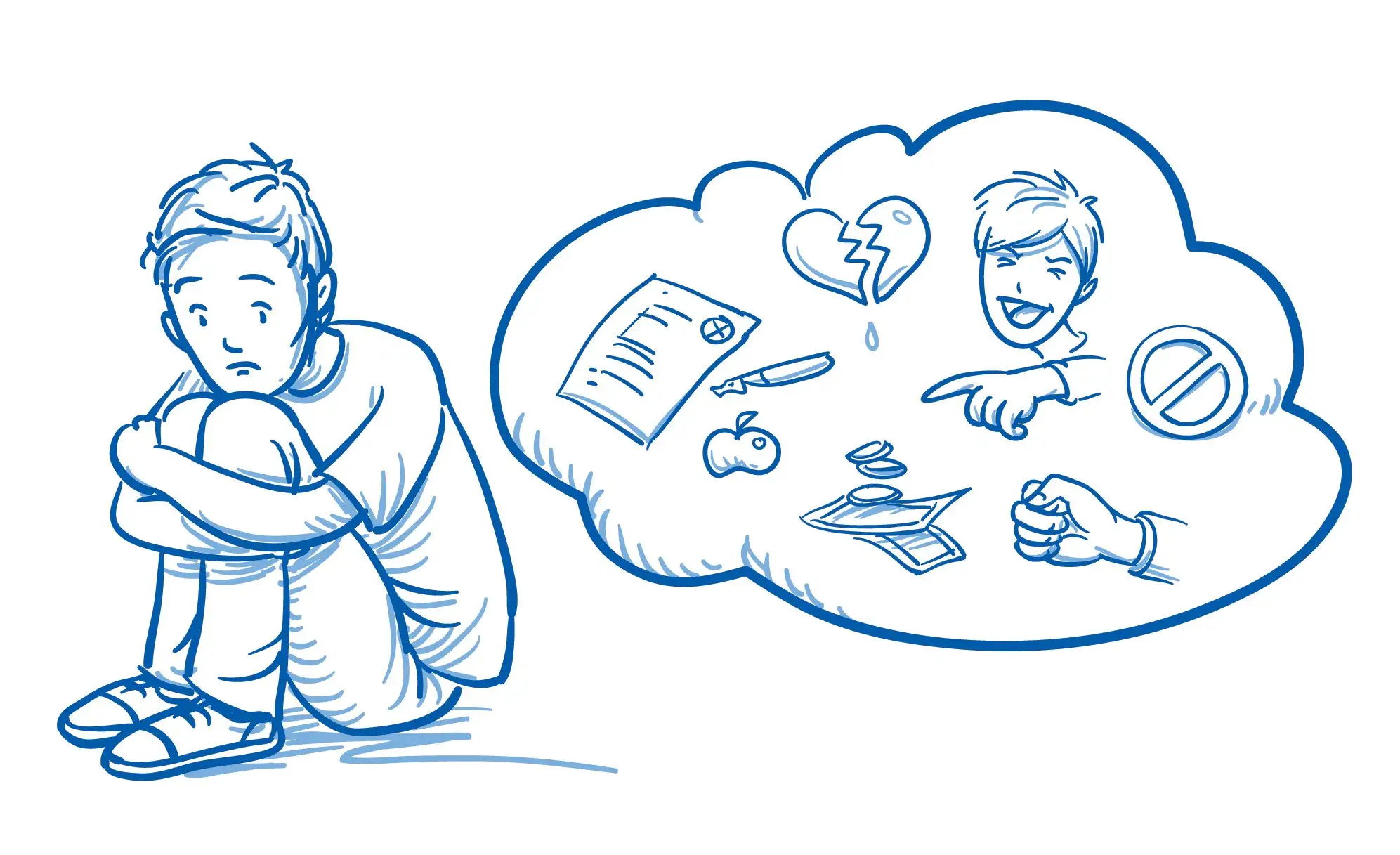
Worldviews are like a set of lenses through which we see life, shaping our thoughts and our actions. In the words of our wise teacher, Jillian, we usually never consciously think about worldviews even though we think through them. I believe many of us have unconsciously adopted the Singapore worldview, having grown up here and coming under the influence of this society. We live in a hypercompetitive, fast-paced society, driven by a need to survive as a small nation with limited resources. From young, we have been fed the standard narrative—study hard, get into a good school, get good grades and get a good job.
I grew up in a family where my parents constantly emphasised that grades are not everything. My parents encouraged my siblings and me to pursue other interests or activities outside of school. As such, I held on to the belief that there was more to life than just studies and grades.
Yet I admit that it was sometimes all too easy to fall prey to a “Singaporean” or dualistic (viewing things as “either/or”) mindset, and lose sight of the relevance of God in my life. Sometimes I felt like I was simply enduring the monotony of school life. Lessons seemed to go on and on, and I struggled to see the real-world applications of what I was learning, rendering them meaningless to me. Spending time with God became just another item on an endless to-do list. My life was no longer centred around God.
The success of our system in ensuring a competitive economy and continued progress has come with countless trade-offs, a reality which I have become more aware of.
Given the time and energy put into homework, CCAs, tuition and outside commitments, there is little to no time to spend time with family, or to pursue recreational hobbies purely for fun. It worried and frustrated me that friends my age all seemed to be overly fixated on grades; all they wanted was to score better than someone else. I disliked how many classmates were reduced to sleep-deprived ghosts defined by performance, whether in their studies or co-curricular accomplishments. In school, some strengths are not deemed useful and one never seems to be good enough, making it easy to feel discouraged. My heart ached at how the pressure to perform made the effect of stress on my friends more apparent, in the form of poorer mental and physical well-being. At times I truly felt that school had robbed students of joy, creativity and a life.
That said, I do recognise the efforts in Singapore to shift away from an overly academic-oriented focus over the years, towards a more holistic view of education. More awareness has also been raised regarding the importance of self-care and mental health, through numerous campaigns targeted at students. No human system is perfect and mindsets take time to change. In today’s world, there seems to be a constant tension between work and rest.
How then, can we see school with God in the picture?
I have been guided by these beliefs—to love God, to love others, and to have a life outside schoolwork.
We have a God who cares about all aspects of life! He is not only the God of church on Sunday, but also the God of Math, Science and the Arts. He is the first and greatest mathematician, scientist and artist, who wants to reveal himself to us in the world he created. By reframing school as a place to learn about God and his world, we can begin to see beauty and God’s heart in each subject.
This way, school becomes God-centred! As Charles Spurgeon said, “He is wisest who reads both the world-book and the Word-book as two volumes of the same work, and feels concerning them, ‘My Father wrote them both.’” I believe thinking this way also makes learning and studying easier to enjoy. I am certainly not a top performing student, but I have experienced the joy of learning and doing my best. So when I was preparing to collect my A-Level results in February this year, I knew I could have peace whatever the result.
Beyond ourselves, school is a place where we have opportunities to be a good friend to those around us! I count it a blessing to have made many good friends in school. We could be there for one another and encourage each other.
I also find it important to take time to create, not just passively consume. Made to be creative beings, it is good to exercise our imagination and craftsmanship, whether in doodling, baking, or capturing photos of things we are grateful for. In school, I often walked around to enjoy nature, finding this both restful and rewarding. I believe the Lord reveals many wonderful things through his creation if we would only take the time to observe.
While we strive to work for the Lord and thus give our best in all these things, I would like to suggest that we all need to learn to slow down. I speak not only to students, but also to those in the working world. Efficiency need not always be a priority, and our work should not become our God. It is my prayer that we may all learn to see our lives and work from God’s perspective, to be a worker or “a student with a sole fulfilment, to make my work a sacrament”.¹
1 From A Students’ Prayer (Source unknown)