While in South Korea recently, I came across a story of human tragedy that is also one of resilience and hope—the story of dispersed families torn apart by war.
Many of us are unaware of the Korean War, which was fought from 1950 to 1953 and is technically not over yet since no peace treaty has been signed. Over the three years, about a million soldiers and two to three million civilians died. Over 10 million Koreans were displaced. In the process of fleeing from the fighting and resulting devastation, many families were separated. They were unable to determine whether their loved ones were alive or dead, and if alive, where they were. The division of the Korean Peninsula into North and South further prevented reunification for these families.
In 1983, on the 30th anniversary of the ending of hostilities, a South Korean television company broadcast a programme featuring some Koreans looking to be reunited with family members. What started as a single 90-minute show triggered an avalanche of calls for the programme to continue. And continue it did, running for 138 days! The “Finding Dispersed Families” show received over 100,000 applications from families seeking lost relatives and successfully reunited 10,000 families.
Seven decades after the Korean War, I sense that some Koreans still harbour a desire and hope for unification. They long for reconnection not only with family members, but also with their lost homes and perhaps even to witness the reconnection of the divided halves of their country.
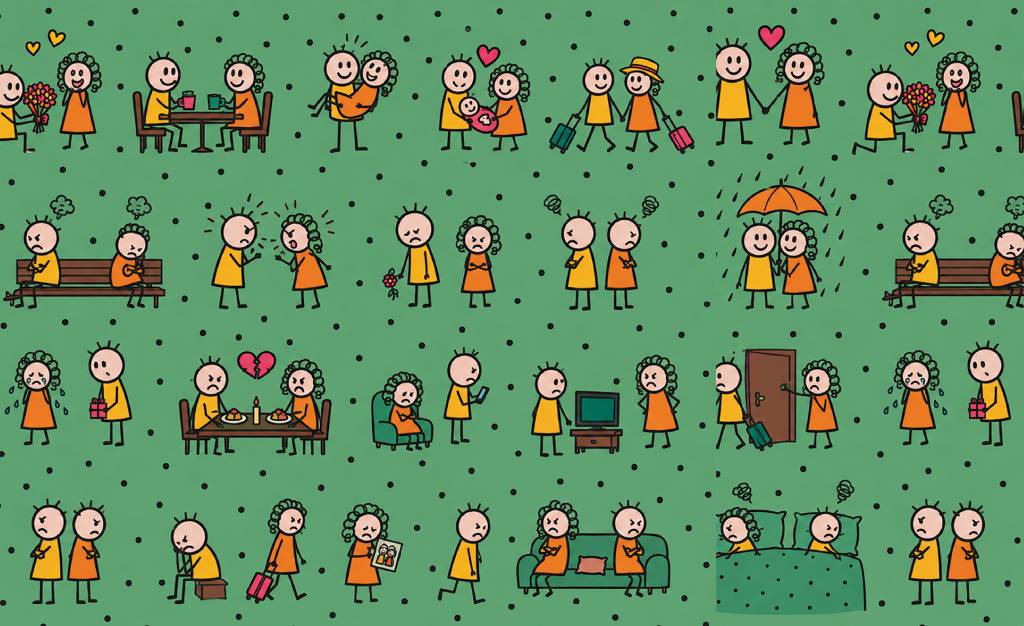
Some of us may share similar experiences of disconnection from family or with a particular family member. The tearing of the fabric of the family may happen when members cut themselves off from one another because of disputes. Ruptures may also arise from conflicts like when a family member chooses to leave the faith of the family or adopts a lifestyle choice that is seen as an affront to the family. These fractures in relationships can be long lasting if not as permanent as those experienced in the tragedy of war. They can be experienced with deep emotional intensity and alter one’s outlook on life. The anger, disappointment or pain generated may lead parties to sever all ties or put up barriers so that any attempt for reconciliation is frustrated.
There is, however, a significant difference between families dispersed by external conflicts like wars and those broken by internal disagreements. The latter can be repaired and restored … if the parties are willing.
Restoration starts with recognising the impact of loss of connection.
Restoration starts with recognising the impact of loss of connection. If the impact is minimal or even positive, as in a case of cutting off a manipulative or abusive family member, seeking reconnection is unlikely.
Next comes personally acknowledging one’s own culpability and offering forgiveness. When repairing the rift involves both parties to take action, one may ask who should be first to extend an olive branch? It can be assumed that whoever is more at fault should make the first move. However, there is often disagreement over who is more to blame. In such cases, let the person who makes the first move be the one who wants reconciliation—not because they are more at fault or feel more needy of restoration, but because it is the right thing to do.
Restoration can be slow work. As the parties involved tend to find fewer points of agreement about the past, it probably would be more fruitful to focus on the future. The slow process of making concessions and accommodating each other may be the first steps to mending the rupture.
There are also times when family is replaced with friends, career and recreational pursuits. Understandably, priorities may vary at different stages of our lives. It may even be seen as good for personal and psychological growth and well-being to differentiate from our families. My use of the term “replaced families” draws attention to the possibility of permanently disconnecting from family. When this happens, elderly parents or grandparents feel neglected and unwanted. I think we also lose an essential part of what makes us human and social beings. Being human is being in a web of meaningful relationships, where we both receive and give care to one another.
Being human is being in a web of meaningful relationships, where we both receive and give care to one another.
May we always treasure our families, with all their warts and beauty, while it is still possible. There will undoubtedly come a time when they are no longer with us.
Benny Bong has over 40 years of experience as a therapist, clinical supervisor and trainer. He also conducts regular talks and webinars. Benny has helmed the You & Your Family column for more than 20 years and is a member of Kampong Kapor Methodist Church.
1 Mark A. Hubble, Barry L. Duncan & Scott D. Miller. The Heart and Soul of Change: Delivering What Works in Therapy. (1999) American Psychological Association.