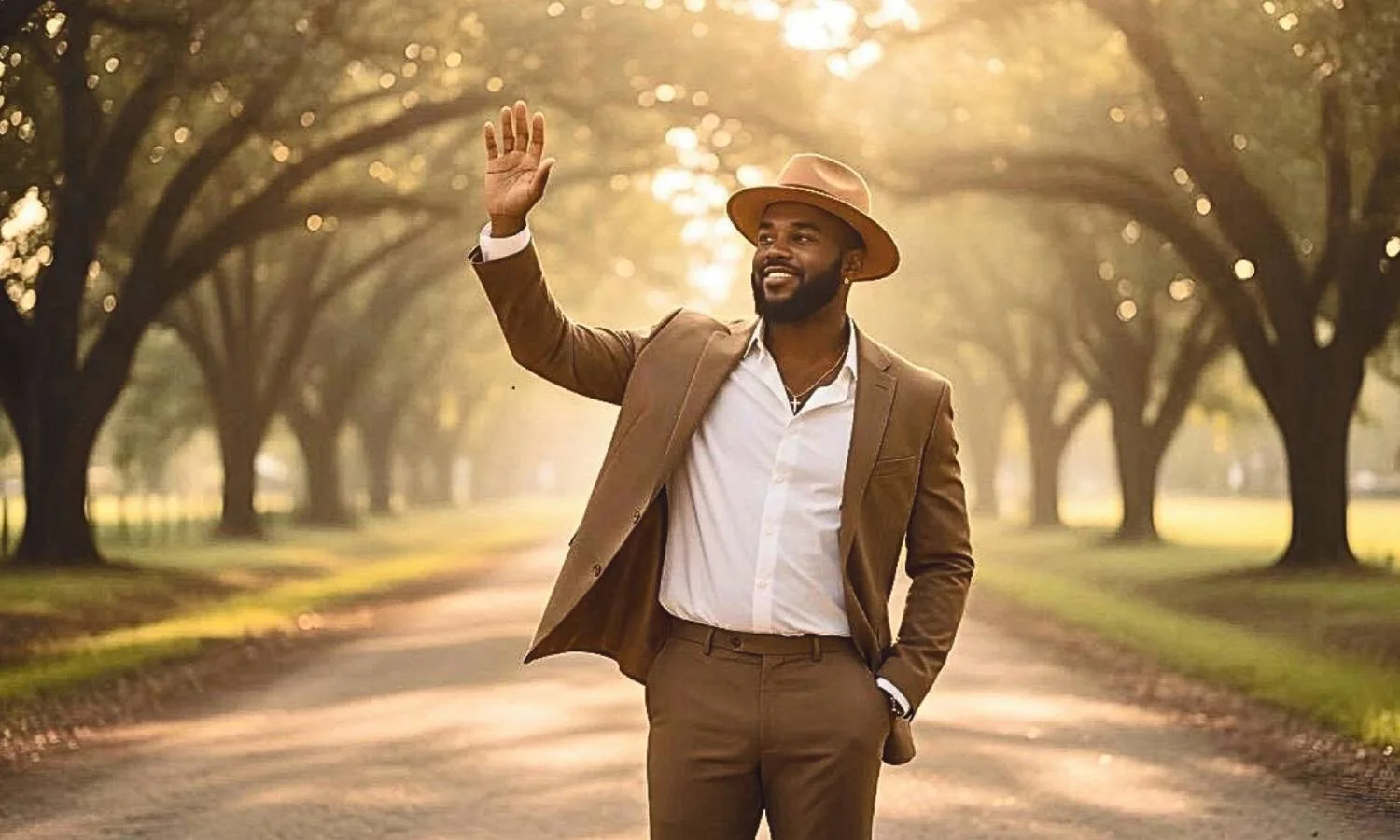
Solomon Ray is an artist created by generative artificial intelligence (AI) that recently appeared in the Top 100 Christian artists on iTunes. This led to fierce debate among Christian musicians and listeners about the role of AI in worship music. Many argued that AI-generated music lacks spiritual depth or the presence of the Holy Spirit. The creator defended his project, saying that the music reflected his own creativity and Christian inspiration, despite not being performed by a human.
Regardless of your personal stance on AI, this situation shows how far technology has advanced. If AI can mimic the sound and feel of worship music, do human artists even matter anymore?
As a musician myself, I wonder about the future of art. I worry that human creativity could be undervalued in a world built for convenience. If anyone can generate perfect music instantly, does the act of making music still matter?
I think that it matters now more than ever.
Worship is not just “nice” songs
When I’m called to make music that matters to me, I want to remain connected to the work as much as I can. And for me, that means more than just producing something that sounds “nice”. When I work with singers and musicians from the Methodist Festival Choir and Orchestra, I’m not solely focused on creating a piece that sounds “nice”.
I’m also asking myself questions like: how can I support the text through music? How can I convey the message clearly to the listeners? How can I craft unique parts for each individual musician that lets them feel personally involved and inspired?
Personal and imperfect worship
John 4:23 reminds us that God seeks worshippers who worship “in spirit and in truth”, and Romans 12:1 calls us to offer our bodies and lives as “a living sacrifice”. By being creatively invested in the music we make and offering it all for God’s glory, we live out this message of giving.
Worship is not only about the quality of the music, even though that is part of it. Worship is an intensely personal experience where we are called to give of ourselves. Because there’s something uniquely meaningful about making music (or any type of art) with others.
When the choir hits the harmonies just right, when musicians play in the pocket and “click” together, when congregations join along in song— all these forms of collaborative creativity can be spiritually transformative, both for those creating and those witnessing it.
When the choir hits the harmonies just right, when musicians play in the pocket and “click” together, when congregations join along in song— all these forms of collaborative creativity can be spiritually transformative, both for those creating and those witnessing it.
Whether we choose to or choose not to use AI, we must remember that it is just a tool. We need to use it responsibly and ethically, because no tool can generate faith. No tool can worship. Only we know in our hearts how we truly feel. Film director Bong Joon Ho put it well: “AI is good because it’s the very beginning of the human race finally seriously thinking about what only humans can do.”1
We are all blessed with a spark of creativity. Everyone can create art that moves hearts. And if the work of our hands is imperfect, that’s not a flaw—it’s the gift we lay before God. Our humanity— and our imperfection—is part of worship. We come before our Maker as we are, and we leave the worship space still human, still imperfect, still learning. Yet God also places tools in our hands, and that includes technology. AI may be one of those tools that challenges our minds, stretches our creativity, and most importantly, does not harm others.
May we be discerning in how we use it, so that we remain co-creators with God, offering our work in spirit and in truth. As the saying goes: that’s not a bug, it’s a feature.