Across Methodist churches, our church choirs are either ageing or getting smaller. As a choir director, I have struggled with an “existential crisis”. In an era where contemporary worship music has become a staple in most church services, what role is the choir to play? Have we understood its place in worship rightly and how might its voice continue to serve the Church today?
These questions were on my mind when I found myself at a crossroads in 2024. As the music director of Fairfield Methodist Church’s (FFMC) choir, I was confronted by challenges that had become too big: choir membership had dropped from 16 before COVID-19 to only nine ; our resident accompanist left the church and the few who could serve in this role were already serving elsewhere; rehearsals became increasingly difficult to sustain as members were also in other ministries; and there was no one who to replace or succeed me, even as my own focus shifted towards children’s music ministry. By the following year, I had come to terms with the painful reality of closing the choir’s chapter in our church life. I could not yet see what might follow.
A choir gathering … really?
Amid these challenges, a combined choir retreat began to take shape through conversations within the Worship and Music department. This became an opportunity for choir directors and choristers to come together and reflect on the realities many of us were facing. What if we gathered not just to sing, but to encourage one another in the ministry? It sounded promising, though there were questions about whether there would be sufficient interest.
Despite some initial apprehension, the registration numbers grew—from a slow start to people pouring in right up to the week of the retreat. To me, the unexpected response was a sign of God’s divine work, drawing together weary choristers’ souls (including mine) for an encounter with him.
God’s plan for choirs
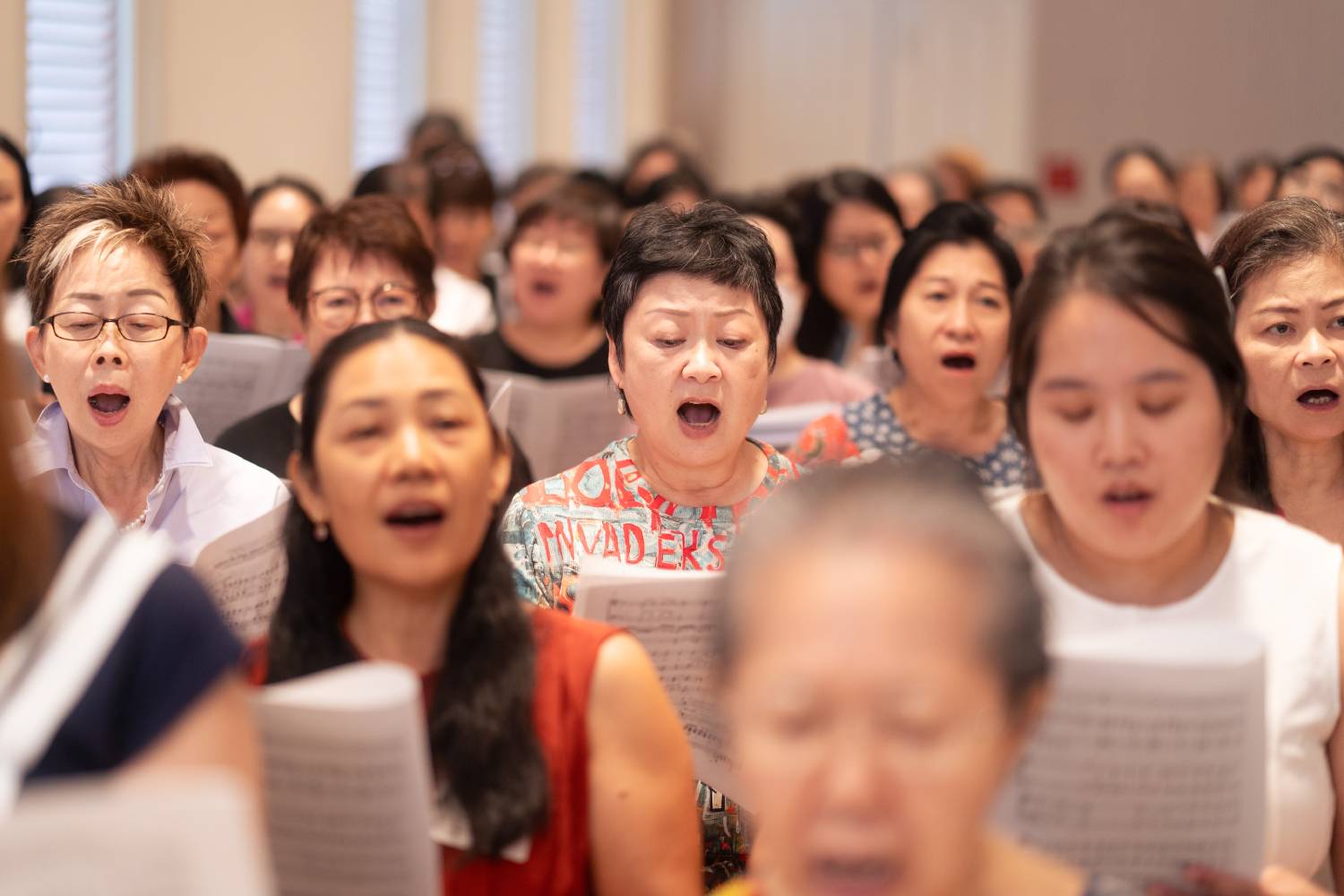
On 21 March 2026, about 180 of us (participants, guest speakers, MSM staff and volunteers) gathered at Telok Ayer Chinese Methodist Church for a full day of worship, singing, exploring new repertoire and rediscovering God’s plan for choirs.
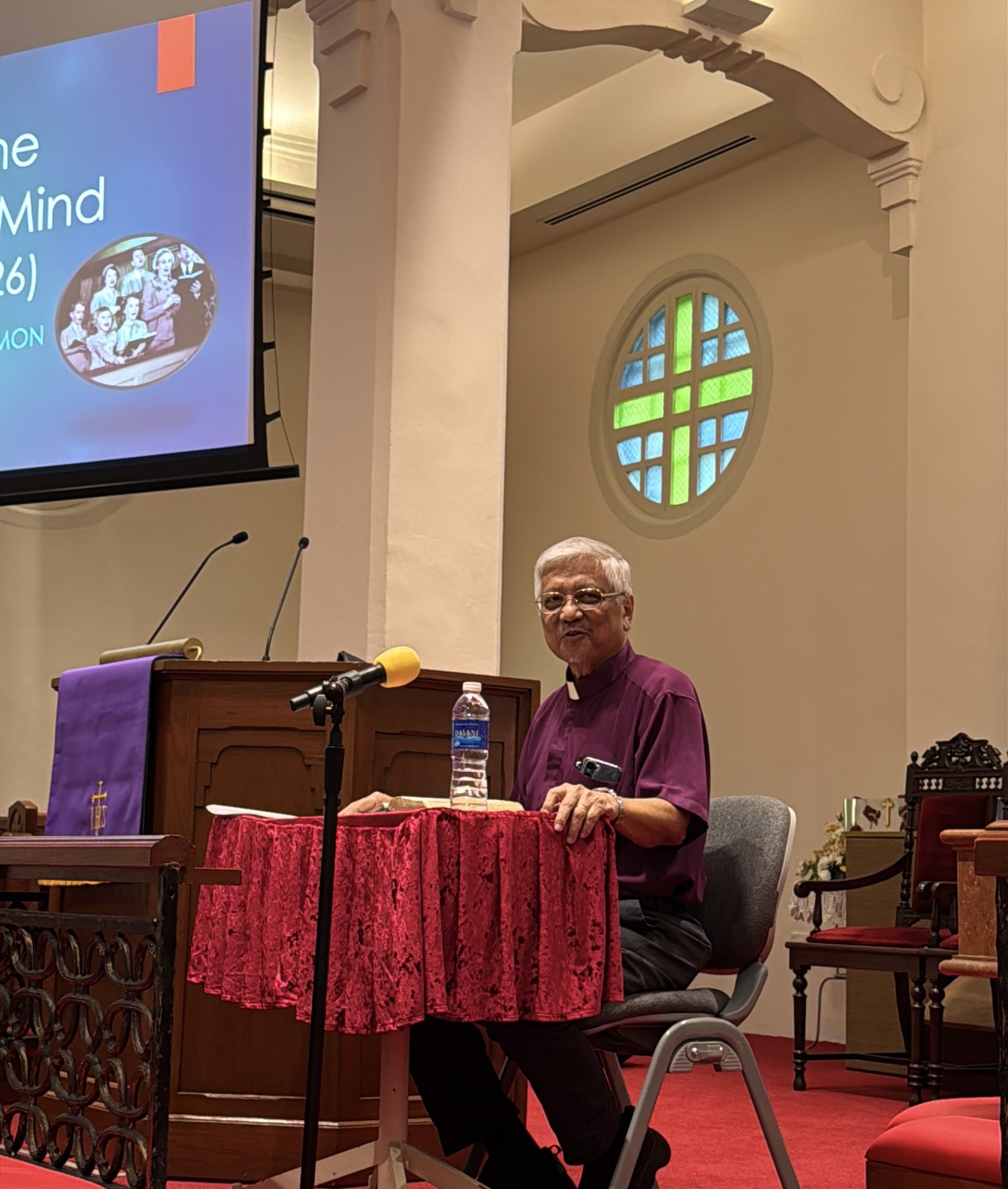
The morning sessions by Dr Ho King Hee and Bishop Emeritus Dr Robert Solomon addressed concerns about the state and future of choirs. They affirmed that choirs are God’s idea, not a human invention. I was reminded that worship is an all-of-life response to God. Choristers must therefore continually strive to know God more deeply to truly worship Him.
Dr Ho, who was formerly FFMC’s Worship & Music Ministry Chairperson, emphasised that true worship is more about right living rather than right liturgy, and that God does not seek worship—he seeks worshippers. Moreover, choir rehearsals are fundamentally about discipleship, not merely musical preparation. Drawing from 2 Chronicles 20, he reminded us of the choir’s role in spiritual warfare. Bishop Emeritus Dr Solomon, reflecting on the New Testament and Wesleyan tradition, cautioned against the temptation of performance and highlighted evangelism and edification of the congregation as the fruits of true worship. He also urged churches to reclaim the treasure house of church music built over centuries and pass it on to younger generations, affirming that God’s work through choirs is far from over. As he put it, doctors and lawyers will have no job in heaven; only singers will continue singing in heaven.
The afternoon was filled with singing. We explored repertoire by local composers (e.g. Lim Swee Hong; Bishop Emeritus Dr Solomon); contemporary Christian music; Methodist hymnwriters like Fred Pratt Green; folk tunes from Tanzania, Ghana, Sweden, and even rediscovered unsung treasures from the United Methodist Hymnal. Dr Eudenice Palaruan, a composer, conductor and music educator, also led us in rehearsing a majestic choral arrangement of “When In Our Music God Is Glorified”, where we learnt to “sing less, listen more” and sing one another’s parts because “choir is a relational endeavour”.
A movement renewed
I emerged from the retreat with a renewed conviction that choirs play a vital role in church life. Although my own church no longer has a choir, I was so glad to have met and sung with so many like-minded brothers and sisters who share the same passion for choral ministry.
Something began that day—something we did not fully plan but gratefully received. Many sensed that God is at work among us, drawing us together in song and renewing our love for this ministry. As we continue to reflect on what it means to sing as the people of God, may this spirit of shared song take root once again in our churches, so that we may confidently affirm our Methodist identity as a people shaped by a singing faith.