
The world is messy. We see conflict, division and broken relationships everywhere. A small irritant can cause one person to snap—and what begins as a petty argument can lead to silence, estrangement or even the breaking of a lifelong relationship. So we ask: How do we fix it? Where does healing begin? Is it with the family? With worship? With the Church?
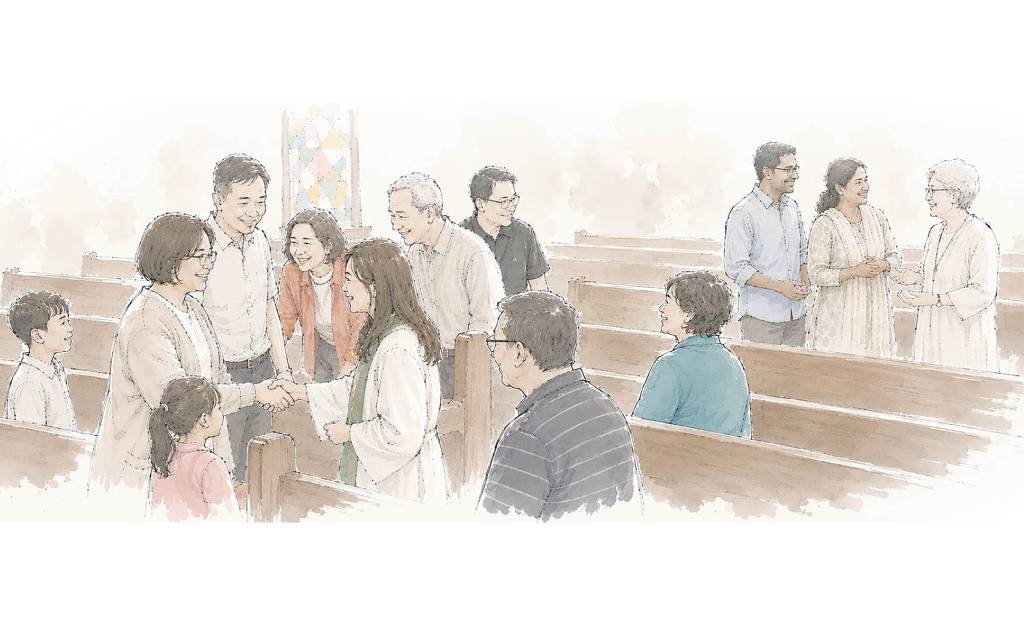
There’s a familiar African proverb: “It takes a village to raise a child.” It speaks to the role of community in shaping a person. But before the child ever enters the village, there is the family—the place where life begins, where patterns are formed and where identity is first shaped. For this reflection, let us imagine the village as the church. Ideally, a child who is nurtured at home and then grows up in the church will find a beautiful continuity: the values lived out in the home are echoed in the body of Christ.
But what exactly does the child learn from home and church? At the core, the child learns that they are first and foremost a child of God—loved, cherished and created with purpose. In the family, they learn love, forgiveness, trust and worship through simple, daily rhythms: praying before meals, saying sorry, giving thanks and singing songs of faith. In the church, these values are affirmed and practised in community: loving others, serving and worshiping together.
As the child grows, they carry these values into the wider world. Faith becomes action. Grace becomes a way of life. In this way, family and church form the foundation of a just and compassionate society, where values are not just taught but lived out. In God’s divine design, worship does not start on Sunday morning. It begins in the everyday moments of family life and grows into a way of being that touches the world.
Having lived in Singapore for 19 years now, I often find myself longing for the closeness of family. My children’s friendships and communities have been shaped by experiences very different from my own upbringing. Even their cousins are growing up in cultures that do not necessarily mirror our traditions. My parents passed in 2013 and 2014, and since then, there have been moments I wish our family was not scattered across the globe so that we could share more of life in the same space.
During a recent trip to the United States, I travelled with a mission: to gather around a table, share a meal and reconnect with family and friends. We shared stories, laughed about the old days and reflected on how much life had changed. In those moments, I felt the warmth of belonging. But I also became aware of how some had unintentionally been left out over the years. This realisation stirred something deeper in me: a longing for a table big enough for all, where differences were not divisive but enriching.
Maybe the goal is not to preserve sameness, but to make room for difference. And maybe worship—true worship—is about learning to sit at the table together, to listen deeply and to delight in one another as we are. This, too, is part of the divine design of the family.
Maybe the goal is not to preserve sameness, but to make room for difference. And maybe worship—true worship—is about learning to sit at the table together, to listen deeply and to delight in one another as we are. This, too, is part of the divine design of the family.
This vision of worship is taking shape in the everyday, making room for one another across generations and cultures. It can come alive in practical ways, too.
What if, instead of letting our civic calendar shape our Christian lives—letting exams, holidays and school breaks dictate our priorities—we allow the Christian year to shape our families’ rhythms instead? What difference might it make if our children knew the significance of Advent before the rush of Christmas, or understood Lent as a season of reflection and not just a countdown to Easter eggs?
May our families, however near or far, be places where Christ is made known, and worship becomes a way of life.
In June, the Methodist School of Music is holding a children’s camp—Worship Generation Children’s Camp—centred on music and worship, shaped by the life of Christ as told through the Christian year. This is more than just a camp. It is an invitation for children to encounter the story of Jesus not just as a set of lessons, but as a rhythm that gives shape to life. The hope is simple but profound: that families begin to live out a Christ-centred year together, learning to worship not only on Sundays but through the seasons—anticipation, birth, growth, suffering, resurrection and mission.
For more information, visit tinyurl.com/ChildCamp2025.