While getting to know our fellow travellers on a recent overseas group tour, a lady sitting opposite us said, “These are my three sisters.” Perhaps observing my surprise, she quickly added, “My spiritual sisters.” Coming from the same church, they often travelled together. They were one of the sub-groups that banded together. My wife and I were possibly the most different from the others and were “adopted” by this foursome. Our experiences during the tour set me reflecting on family, both spiritual and earthly. The group was a motley collection of travellers but bore some resemblance to how a family may operate.
One thing that struck me anew was that every family has a cultural identity, formed over years of living together. This can take the form of shared habits, routines, values, etc. In situations like a group tour, members quickly find things they have in common. Everyone on our tour was ethnically Chinese, and people started chatting and bantering in Mandarin and in dialects once they felt comfortable with one another. As I am sometimes called a “banana” (Chinese outwardly but more Western-oriented inside), I felt left out of the interactions.
There were also awkward times during mealtimes as we were not a couple with whom the others would naturally choose to sit. Clearly, in any social setting, one can feel included or excluded, welcomed or simply tolerated. I recalled that when I was growing up, my two older brothers often chose to be with friends their age. I ended up hanging out more with my sister.
After a day or two, we found that what we took for coldness and aloofness perhaps stemmed more from uncertainty about how to relate to us. I realised that I was too quick to judge and if we made an effort to listen and get to know them, each person could have an interesting life story to tell, helping us overcome our misgivings and prejudices.
Likewise, families are made up of people with similarities and differences. Sometimes, we give up trying to understand each other and explain the differences in broad terms like there is a “generation gap”, or so-and- so is “emo” in personality. Such shortcuts, instead of building understanding and connection, only heighten the differences. We should listen, understand and communicate to preserve family unity while respecting differences.
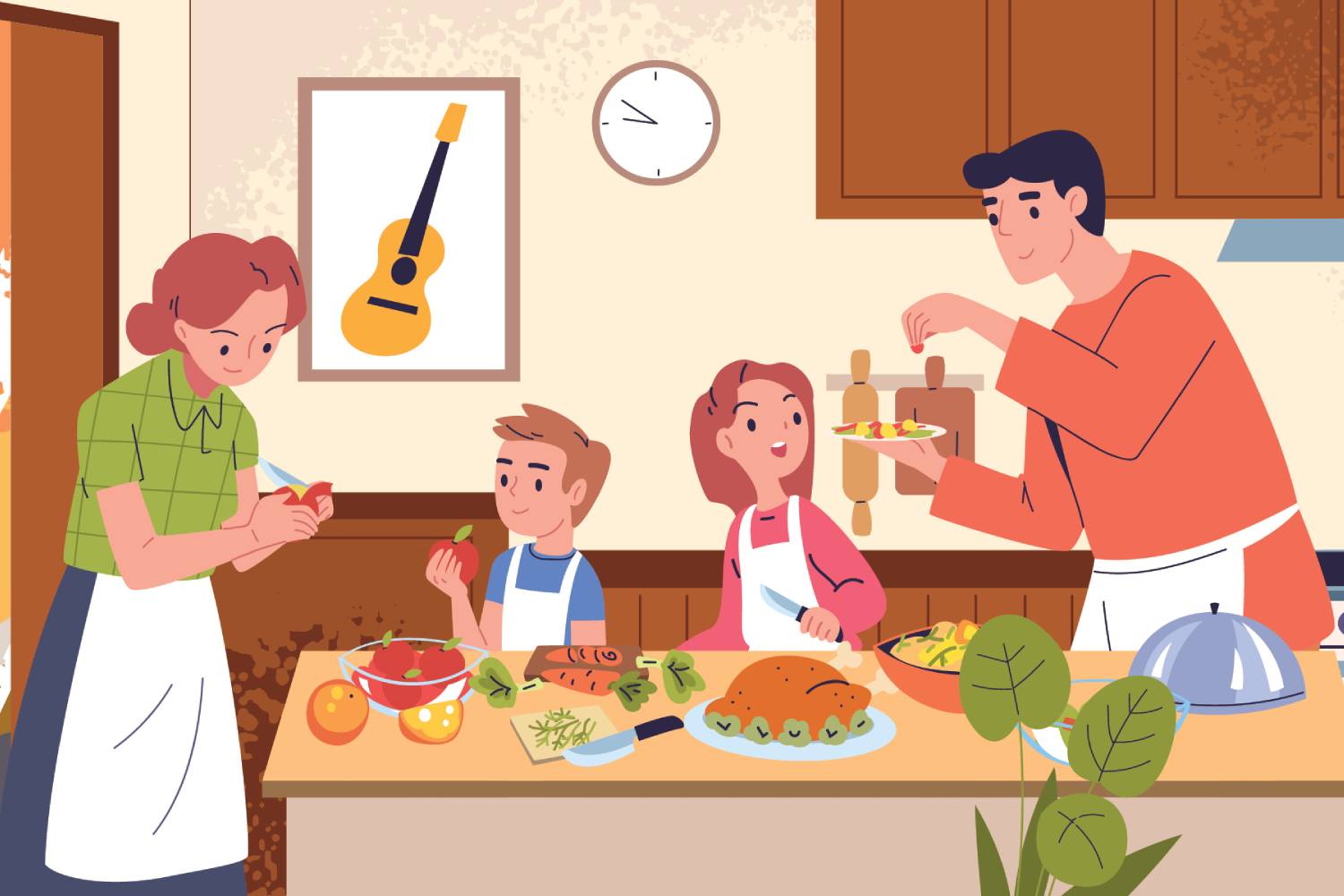
Families often form smaller groups centred around common interests. This is not necessarily a bad thing. However, to build strong ties, families also need to cultivate shared values and routines— such as having meals together (without distractions like handphones or over-focus on school and homework), celebrating special occasions or going to church together. Waiting for a crisis or a need to arise to unite the family may be futile if bonds are weak in the first place. To thrive, families need to learn to laugh, play and at times mourn together.
Finally, strong families do not just happen; they need strong leadership. During our tour, I saw the role our “leader” played in keeping the group together. He was not officially appointed but was just someone everyone knew and who was more familiar with the itinerary and willing to provide guidance. Though he was tested by our not following instructions, straying from the group and being late, he stayed patient, firm and polite.
The family’s leaders—usually the parents—must also work effectively as a team. This means not having only one doing all the heavy lifting of parenting and disciplining while the other is hands-off. There will be times when one parent carries a heavier load in areas of their relative strengths and talents. When this happens, it should be done with the full agreement and support of the other. Being an effective team also means that when there are differences of opinion or viewpoints, they are able to have constructive discussions or even healthy disagreements.
There will be times when one parent carries a heavier load in areas of their relative strengths and talents. When this happens, it should be done with the full agreement and support of the other.
A flourishing family is not solely for our benefit. It also models to others what our families, earthly and spiritual, can be like. We need to ask ourselves: Do our relationships with our family members and with those in the household of faith positively reflect what it means to have God as our Father and to live as his children?
Benny Bong has over 40 years of experience as a therapist, counsellor and trainer. He also conducts regular talks and webinars. Benny has helmed the You & Your Family column for more than 20 years and is a member of Kampong Kapor Methodist Church.