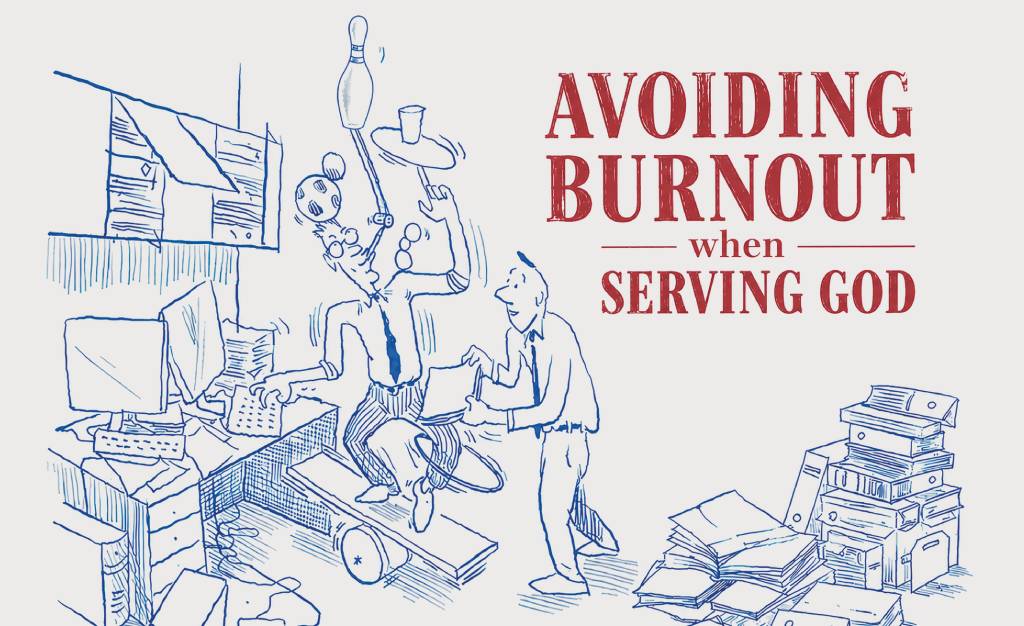

Despite the myriad of new technologies that flood our lives such as smart phones and generative AI, we still experience the tyranny of work in the digital age —perhaps even more so.
We can accomplish in an hour what would have been unimaginable fifty years ago. Yet, we are perpetually overwhelmed because we feel that there is not enough time for us to do the things we want to do.
We live in an age of ultra-efficiency with “work-life balance” as its mantra, and yet our culture has coined telling terms such as “time-starved”, “time-poor”, “time famine”, and “overscheduled”.
Why is modern life characterised by such chronic busyness?
In his article in Sloww,1 These include:
- Busyness as a badge of honour and trendy status symbol
- Busyness as job security
- Busyness as FOMO (Fear of Missing Out)
- Busyness as escapism
Perhaps the heart of the problem has to do with the fact that our culture has lost the true meaning of rest that is embodied in the biblical concept and practice of the Sabbath. And perhaps it is the retrieval of the Sabbath rest that would provide the important perspectival shift needed to better respond to a culture that remains obsessed with work and productivity.
What is the Sabbath?
At the very basic level, the Sabbath has to do with the cessation of labour for a day following the pattern of the divine activity of creation recorded in the second chapter of Genesis. For there we read: “By the seventh day God had finished the work he had been doing; so on the seventh day he rested from all his work” (Genesis 2:2 NIV).
God’s covenant people were commanded to follow the same rhythm of work and rest:
Six days you shall labour and do all your work, but the seventh day is a sabbath to the Lord your God. On it you shall not do any work, neither you, nor your son or daughter, nor your male or female servant, nor your animals, nor any foreigner residing in your towns. For in six days the Lord made the heavens and the earth, the sea, and all that is in them, but he rested on the seventh day (Exodus 20:9-11a NIV).
Even at this most basic level, the idea and practice of the Sabbath is controversial and radically counter-cultural in our day.
This is because—as Old Testament scholar Walter Brueggemann and others have argued—the practice of the Sabbath can become a form of scathing cultural critique.2 It can be a statement of resistance to the tyranny of work endemic in a capitalist economy, and even a rejection of the subtle commodification and monetisation of human life.
However, it would be a gross misunderstanding of the Sabbath rest if it is regarded simply as a labour-free day. Returning to the two passages quoted earlier, we find an emphasis that must not be missed:
- “Then God blessed the seventh day and made it holy“ (Genesis 2:3 NIV).
- “Remember the Sabbath day by keeping it holy … Therefore the Lord blessed the Sabbath day and made it holy“ (Exodus 20:8, 11b NIV).
The Sabbath day is therefore truly a “holiday”. The word “holiday”—whose etymology and true meaning has largely been forgotten—comes from the old English hāligdæg, which means “holy day” (hālig for holy and dæg for day).
This reminds us that Sabbath rest is not to be confused with a time of sheer leisure and idleness. Rather, it is a sacred time of quiet reflection and worship, even as God’s created co-workers who bear the divine image enter into the rest of their Creator.
This reminds us that Sabbath rest is not to be confused with a time of sheer leisure and idleness. Rather, it is a sacred time of quiet reflection and worship, even as God’s created co-workers who bear the divine image enter into the rest of their Creator.
Although Christians do not observe the Sabbath in the same way as Jews do according to the strict requirements of Judaism, they continue to uphold the importance of the Sabbath principle.
As the great puritan theologian John Owen puts it:
I doubt not but that the Mosaical Sabbath, and the manner of its observation, are under the Gospel utterly taken away. But as for the weekly Sabbath, as required by the law of our creation, and reinforced in the decalogue, the summary representation of that great original law, the observation of it is a moral duty, which by divine authority is translated unto another day.3
The recovery of the practice of Sabbath observation will not only restore a healthy rhythm of work and rest. It will also dispel the fog, confusion and frenzy created by the demands of the modern age.
The recovery of the practice of Sabbath observation will not only restore a healthy rhythm of work and rest. It will also dispel the fog, confusion and frenzy created by the demands of the modern age.
The Sabbath is not just about mandating rest. Most significantly, it is about helping us understand our place and purpose in God’s creation in which we are called to be faithful stewards.
Dr Roland Chia is Chew Hock Hin Professor of Christian Doctrine at Trinity Theological College and Theological and Research Advisor at the Ethos Institute for Public Christianity.
1 Kyle Kowalski, “Busyness 101: Why Are We SO BUSY in Modern Life? (7 Hypotheses),” Sloww, September 26, 2018, https://www.sloww.co/busyness-101/..
2 Walter Brueggemann, Sabbath as Resistance: Saying No to the Culture of Now (Westminster John Knox Press, 2017).
3 John Owen, 1855, “Exercitations concerning the name, original, nature, use, and continuance of a day of sacred rest”, in Arthur Walkington Pink, An Exposition of Hebrews, Vol. 2 (Blackstone Public Domain, 2021), 402.