10TH SESSION OF THE GENERAL CONFERENCE OF THE METHODIST CHURCH IN SINGAPORE:
SEPT 3-8, 2012
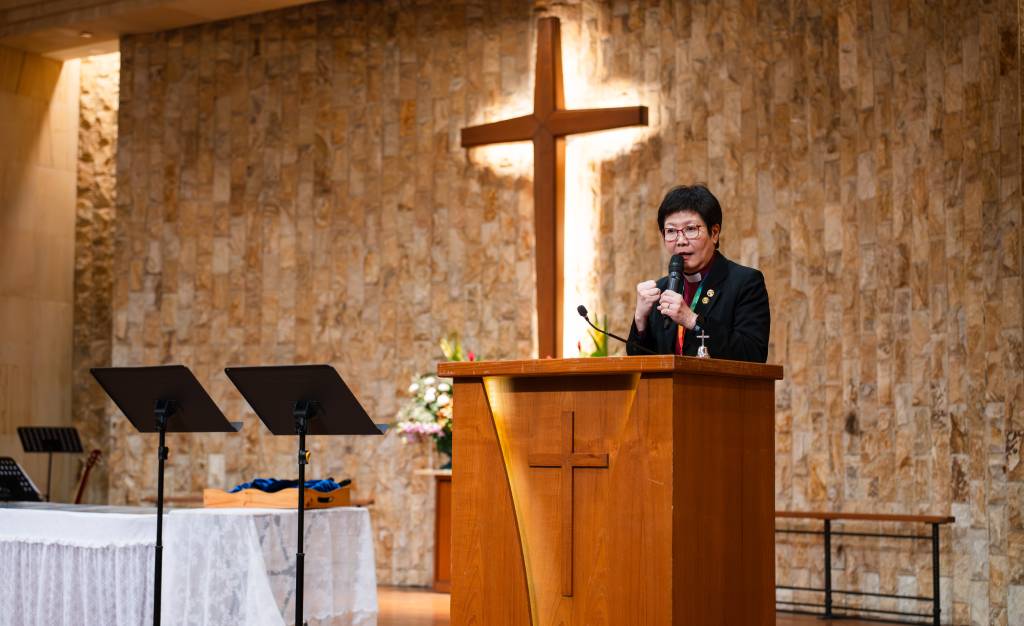
“WHAT IS GOD’S PURPOSE for His people?” This question, which perplexed writer John Stott and his friends as young Christians, was shared by Bishop Dr Robert Solomon at the Opening Service of the 10th Session of the General Conference of The Methodist Church in Singapore.
In contrast to the renowned Westminster Shorter Catechism that says “Man’s chief end is to glorify God, and to enjoy Him forever”, and the well-known summary of the Old Testament Law, “Love God and love your neighbour”, John Stott found peace in the knowledge that “God wants His people to become like Christ, for Christlikeness is the will of God for the people of God.”
This, said the Bishop, was in line with the theme of the Session, which was “Becoming partakers of the divine nature”, taken from 2 Peter 1:4. He noted that this was different from a casual, informational knowledge of God, pointing out in Matthew 7:22-23 how Jesus drove away people who performed miracles in His name but did not know Him personally.
Bishop Dr Solomon cautioned the delegates that “all that we do in church must focus on producing and deepening the relational knowledge of God and of Jesus. If that is not taking place, then we are wasting our time, efforts and money. Everything else, our institutions, programmes, rules and meetings, are only means to an end and must not become ends in themselves.”
How can we reflect on whether we are becoming partakers of the divine nature? The Bishop drew answers by studying 2 Peter 1:2-11. First, we need to accept God’s gift of grace through His promises and power. God’s promises are utterly reliable because they are based on His glory and virtue, as stated in 2 Peter 1:3, and His power is transformative.
The Bishop said: “A measure of whether God’s promise and purpose is in the centre of our attention is how much we talk about God during our Conference, and how central He is in our discussions and decision-making. A measure of how focused we are on becoming Christ-like is how much of our discussions and programming is intentionally and consciously in that direction. How much of our conferencing reflects the character and maturity of Christ?”
Second, although we depend on God’s grace, we must cooperate with God through process and practice to live a disciplined life that reflects a vibrant discipleship. The Bishop pointed out that Christians are asked to grow “in increasing measure” in the qualities listed in 2 Peter 1:5-7, which act as milestones along a journey from faith to love.
He asked: “What have we added to our character since we last met? What evidence have we that we are growing in Christlikeness? Are our members who come to worship growing in Christlikeness? What are they adding to their character? In what ways is our ministry in church (preaching, teaching) truly serving to add these qualities in their lives?”
Finally, he noted that “our true effectiveness and fruitfulness depends on keeping focused on God’s grace and our related disciplined efforts to become like Christ. Are we effective? Are we productive? Are we harvesting? If not, what are the problems? What is hindering us?”
As a church body, our goal is to become more like Christ through God’s promise of grace and our disciplined perseverance leading to spiritual harvest.
Grace Toh is the Assistant Editor of Methodist Message.