“Help, help, help.”
When Juliana Leong’s phone lit up with a message from her younger brother, Kenneth, in the family group chat, she was surprised. For decades, Kenneth had kept his distance from the family. He rarely attended gatherings, stayed silent in family chats, and quietly lived life on his own.
The youngest of five siblings, Kenneth had grown up close to his brothers. But as his siblings married and moved into homes of their own, and the family home was eventually sold, Kenneth, who remained single and lived on his own, began drifting away from the family.
Looking back, Juliana wonders if he felt left behind. “Perhaps he was angry that he had been forced out of a home and left to fend for himself,” she reflected.
Even when their father passed away, Kenneth did not attend the cremation, deeply straining his relationship with his brothers.
Then, in 2023, everything changed.
A cry for help
Kenneth’s message came shortly before he was diagnosed with advanced liver cancer. He was 52.
“He said he was in severe pain,” Juliana recalled. “I told my brothers that I was willing to walk through this journey with him, but I would need their help.”
Setting aside past hurts, the siblings rallied around Kenneth. They prepared his newly purchased flat before he was discharged from hospital and supported him through treatment, hospital admissions and the challenges that followed.
For Juliana, it became an unexpected chance to build a relationship with the brother she had never been close to. “I came to know Kenneth more deeply in the last two years of his life than in all the years before,” said Juliana, now 66. “He was a very simple man—and fiercely independent.”
An IT entrepreneur, Kenneth took pride in solving problems and managing life on his own. Even after his diagnosis, he resisted offers of help and insisted he could cope independently.
“The doctor gave him a prognosis of six to 12 months, which devastated him,” Juliana said.
Kenneth outlived that prognosis. But as the cancer progressed, Juliana became increasingly concerned about him living alone and raised the matter with his doctor, who referred Kenneth to MWS Home Care & Home Hospice (HCHH).
For more than a year, the multidisciplinary team, including Senior Staff Nurse Hazel Chua and Medical Social Worker Goh Wei Chuan journeyed alongside Kenneth, managing his symptoms, supporting his emotional well-being and helping him plan for the future—all while enabling him to remain where he most wanted to be: at home.
“He loved the freedom,” Juliana said. “The regular check-ins from the home palliative care team gave me assurance that he was being well cared for.”
Wrestling with faith
Kenneth’s struggle was not only physical, but spiritual. Faced with a terminal diagnosis, he wrestled with questions he had never had to confront before. Why had this happened? Was God punishing him? Had he been forgiven? Would he go to heaven if he died?
Recognising these as signs of spiritual distress, Wei Chuan referred Kenneth to the team’s chaplaincy service.
Over the following year, MWS Chaplain Chua Chiew Poh journeyed closely with Kenneth through regular visits, prayer and reflection on Scripture. Together, they explored what the Bible teaches about suffering, death and the hope of eternal life. “He began by wrestling with why God had allowed this suffering,” Chiew Poh recalled. “But as his illness progressed, we saw his inner resilience gradually emerge. Even as his body grew weaker, his faith became stronger.”
One conversation remained etched in her memory. “Kenneth shared a sacred moment after receiving the prognosis from his doctor,” she said. “He experienced Jesus sitting beside him. In that dark moment of despair, he felt Jesus’ embrace and love, and peace came over him.”
Encouraged by Juliana, Kenneth began attending church with his brother, joined a cell group and was eventually baptised.
More than medical care
Looking back, Juliana believes the greatest gift the MWS HCHH team gave Kenneth was not simply medical care, but genuine human connection.
“For much of his adult life, my brother had very limited interactions with his family,” she reflected. “The most significant change I witnessed was Kenneth’s journey from being a loner to someone who learnt to build meaningful relationships with the MWS team.”
As Kenneth’s illness progressed, he experienced frequent episodes of vomiting, gastric discomfort and pain, resulting in several hospital admissions. Yet he always welcomed visits from the MWS HCHH team, finding comfort in their presence.
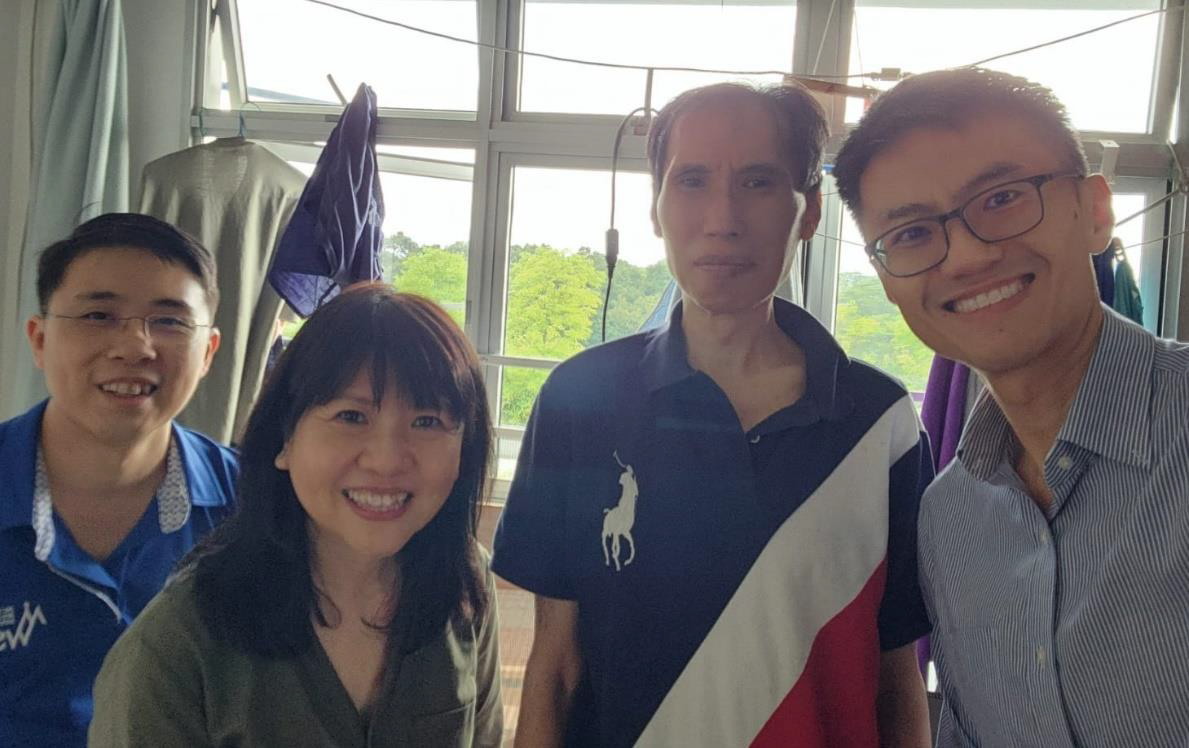
Even after Kenneth was transferred to an inpatient hospice, the team continued visiting him in their personal capacity until he passed away peacefully on 27 August 2025.
“Their visits brought Kenneth hope, joy and encouragement,” Juliana said. “They truly went beyond their call of duty and, in many ways, were the family he never had.”
“By the grace of God, these relationships deepened Kenneth’s faith in Jesus, even amid pain and suffering. I am comforted knowing that his journey ended with peace, strengthened by faith and surrounded by care.”
Support MWS’ palliative care work for terminally ill patients by donating at give.mws.sg. To volunteer, visit mws.sg/volunteer or email volunteer@mws.sg.
Methodist Welfare Services Communications Team. / Photos courtesy of Methodist Welfare Services