
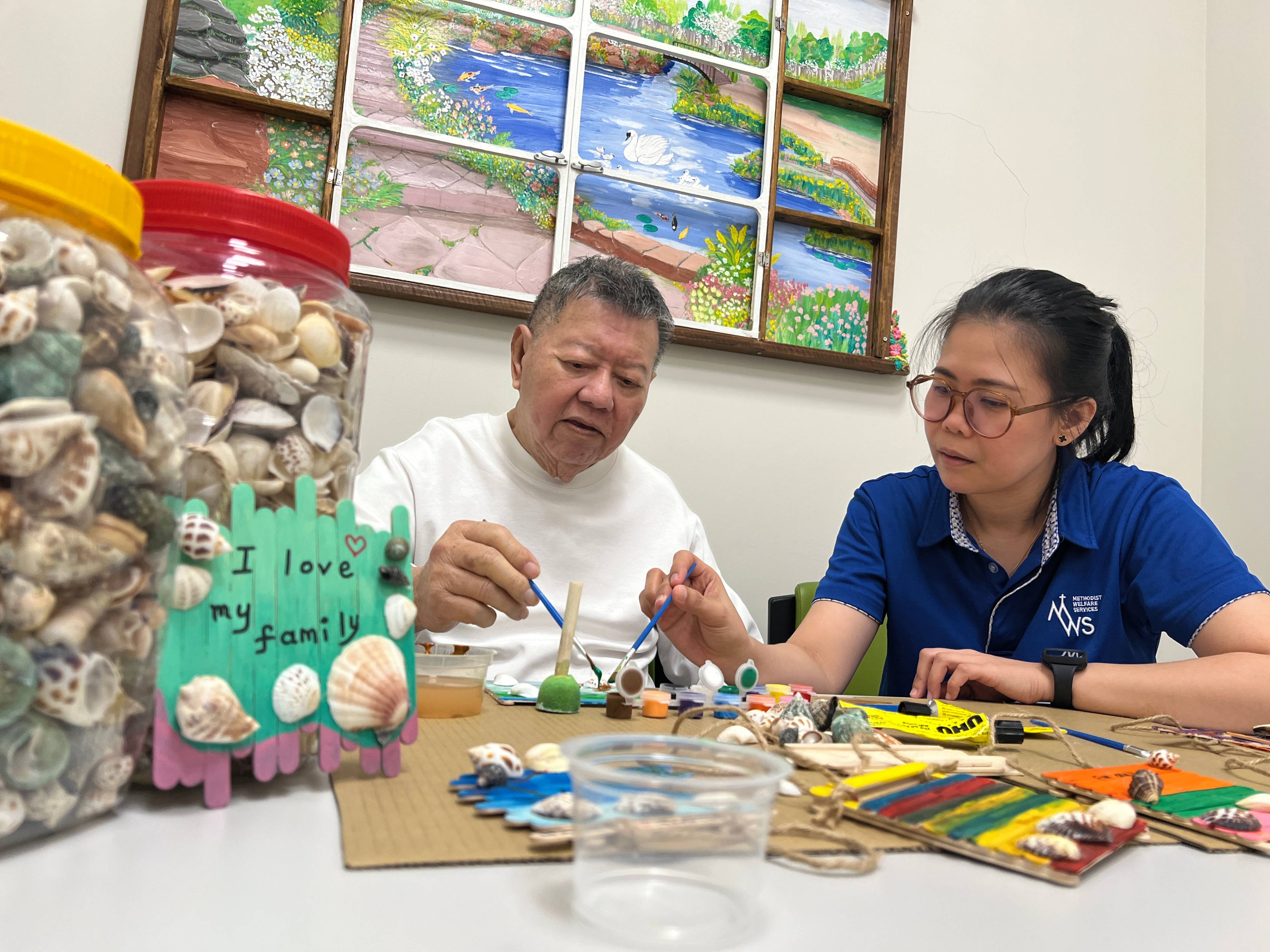
Six years after Mr Wong retired from driving a taxi, his family began noticing troubling changes in his behaviour—from emotional outbursts and a fixation on certain clothes to repeatedly asking the same questions. The changes were particularly difficult for his wife, a homemaker and his primary caregiver.
“My dad used to wear different colours and short sleeves—anything except black. But when he developed dementia, he suddenly only wanted white long-sleeved tops from a certain brand, paired with navy Bermuda shorts,” recalled his elder daughter, who declined to be named. “He refused to wear other brands or colours, so I went to the department store and bought all their remaining stock because they were going to discontinue that design in Singapore.”
The repeated questioning was harder to manage. “He could ask the same question three times in 15 minutes, even though we had already answered him,” she said. “It drove all of us crazy.”
As his condition progressed, Mr Wong became increasingly reliant on his wife. “He would call my mum for anything—’I want my back scratched’ or ‘I want to drink water’—and my mum would have to attend to him,” his daughter said. “It was very difficult for her, especially when she was busy with housework or cooking.”
As his condition progressed, Mr Wong became increasingly reliant on his wife. “He would call my mum for anything—’I want my back scratched’ or ‘I want to drink water’—and my mum would have to attend to him,” his daughter said.
For about a year and a half, Mr Wong’s wife shouldered most of his day-to-day care, leaving her under considerable caregiver stress.
Finding support beyond home
With no hobbies, Mr Wong spent much of his time at home watching television or dozing on the couch. He occasionally met friends when he was more mobile, and his daughters took him out when they could, but his day-to-day social interaction remained limited.
Pain in both knees had also made him less physically active. In September 2024, he began active rehabilitation at MWS Senior Care Centre – Eunos (ESCC), initially relying on a walking stick. Following rehabilitation, he can now walk without it.
Two months later, Mr Wong was formally diagnosed with Alzheimer’s disease, a form of dementia. Concerned that prolonged inactivity at home could contribute to further decline, his daughters enrolled him in MWS ESCC’s dementia day care service, where he could receive professional care and stay mentally, physically and socially engaged.
A new routine
Mr Wong did not take to day care immediately.
“For the first few months, he largely kept to himself, refused to participate in activities and repeatedly asked to go home,” recalled Betcy, an activity and care associate.
Staff patiently introduced him to other seniors and encouraged him to join activities. Gradually, he settled in.
Today, the 79-year-old eagerly takes part in activities ranging from arts and crafts and adaptive sports to cooking and Rummikub. His favourite is mahjong—as much for the company around the table as for the game itself. What began as somewhere his daughters wanted him to attend has become somewhere he enjoys going.
“I like coming to the Centre because I can spend time with friends and pass time in a
more meaningful way,” said Mr Wong. “There’s not much to do at home and it’s usually just me and my wife, but here, there are always many people to talk to and activities to join.”
Space to recharge
For Mr Wong’s wife, the hours he spends at the Centre provide welcome respite. She is less tense and has more time on weekdays for herself, while the family is reassured knowing he is engaged and cared for.
While living with dementia remains an ongoing journey, Mr Wong’s family has learnt that caregiving need not be borne alone. “It is important to get help with caregiving duties and to make time where possible for self-care,” his daughter shared, acknowledging how physically, mentally and emotionally draining caregiving can be.
While living with dementia remains an ongoing journey, Mr Wong’s family has learnt that caregiving need not be borne alone.
With medication and regular day care, Mr Wong’s family said his condition has remained stable. After nearly two years of attending day care, his children have also noticed encouraging changes: he is more alert, communicative and socially engaged, with better situational awareness and signs of improved mood and overall well-being.
“Caring for someone with dementia can be very challenging, so seeing my dad happy, engaged and well cared for means the world to our family,” said his daughter.
Help caregivers find room to breathe
Caring for a loved one can be deeply meaningful, but caregivers need support too. Your donation can help families like Mr Wong’s access care and respite, giving caregivers time to rest while their loved ones stay active, connected and well cared for. Give today at give.mws.sg.
By the Methodist Welfare Services Communications Team. / Photo courtesy of Methodist Welfare Services