Ministry never really stops. A former missionary reflects on why he came home from holidays more tired than when he left—and what Jesus’ invitation in Matthew 11 taught him about resting in God rather than working for him.
When I was serving as a missionary in Thailand, I discovered that resting in God is not something that happens naturally—it requires intentional discipline. Each day, I would drive past a beautiful reservoir on my way to church. Yet, despite the breathtaking scenery, I rarely noticed it. Ministry was relentless. There was always another need to meet, another person to visit, another problem to solve. My mind was constantly occupied with the question, “What more can I do?” I’d admit there were moments that I would feel guilt for wanting to rest, so I just kept going.
Every long holiday, my wife eagerly plans a family getaway. Everyone returns feeling refreshed—except me. Somehow, I come home more tired than when I left. That made me ask a question I had never seriously considered: What does it really mean to rest?
Rest is given, not made
One of the most quoted verses on rest is Matthew 11:28-30 (NIV): “Come to me, all you who are weary and burdened, and I will give you rest. Take my yoke upon you and learn from me, for I am gentle and humble in heart, and you will find rest for your souls. 30 For my yoke is easy and my burden is light.”
Jesus’ invitation identifies a group of people who are especially in need of this invitation—those who are weary and burdened. To be weary is to have physically worked so hard to the point that one is nearing exhaustion. To be burdened, written in the passive perfect form, means that this load or this burden has been placed on the person in the past.
The invitation is for all, especially for those who have laboured tirelessly and are beginning to feel weary in their journey, as well as those who continue to carry burdens that have been placed upon them over the years. To such people, God gives this promise: he will give you rest. This rest is not attained through efforts, it is given.
This changes how we think about rest. We often try to find rest by changing our circumstances, taking a holiday or distracting ourselves. Jesus says that rest is not something we discover; it is something he gives.
By this definition, shopping cannot give us rest, binge watching Netflix cannot give us rest, online gaming cannot give us rest and even exercising cannot give us rest.
This reminds us that ultimately, true rest cannot be found in activities, vacations, or temporary escapes, but in God himself. The rest that Jesus speaks of is far more than mere stress relief or physical relaxation; it is rest for the soul. It is a deep and abiding peace that remains steadfast even amid life’s storms.
This reminds us that ultimately, true rest cannot be found in activities, vacations, or temporary escapes, but in God himself. The rest that Jesus speaks of is far more than mere stress relief or physical relaxation; it is rest for the soul. It is a deep and abiding peace that remains steadfast even amid life’s storms.
Jesus gives three active commands to those who desire to receive his rest:
- Come to me
Rest begins with coming to Jesus personally. It is an invitation into relationship, dependence and trust in him. - Take my yoke
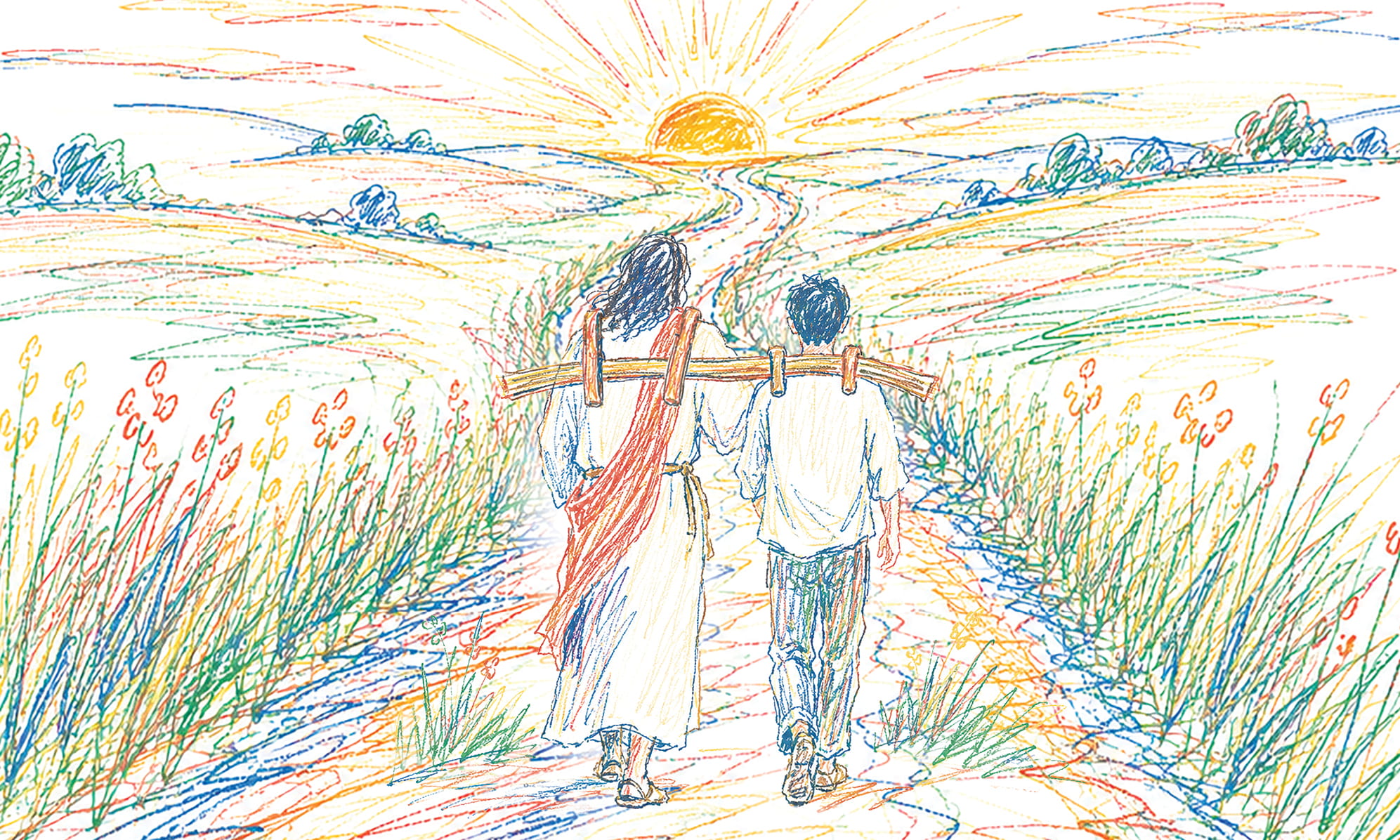
The word “yoke” is repeated twice in this passage, emphasing its importance. A yoke is a wooden beam placed over the necks of oxen to help them pull a load together. Jesus highlights two important aspects of this yoke:
Firstly, the yoke belongs to Jesus. It is not the yoke of the world, our supporters’ expectations, or our own ambitions. Jesus invites us into a relationship where he is our Master, and we willingly submit ourselves to his leadership and direction.
Secondly, it is an “easy” yoke. The Greek word translated as “easy” is chrestos, which can also mean “kind”, “good” or “fitting.” A poorly fitted yoke causes pain, abrasions and injury to the animal carrying it. In contrast, Jesus’ yoke fits perfectly. His leadership over our lives is neither harsh nor harmful. What he places upon us is designed perfectly for us, bringing not destruction, but rest and peace. - Learn from me
The root idea behind the word “learn” is closely connected to discipleship. To learn from Jesus is to become his disciple. A disciple is someone who listens to his instruction, follows his example and practices his ways, and goes out to make more disciples of Jesus.
Therefore, true rest is therefore not found in inactivity nor activity, but in walking closely with Jesus through a life of discipleship and surrender to him.
Being still
The demands of ministry left little room to pause and appreciate the beauty that God had placed right before me. It was only when God gently drew me to be still that I began to understand what true rest meant. As I sat by the reservoir and spent unhurried time with him, there was no dramatic revelation or extraordinary experience. Instead, he gave me something far more precious—a deep and quiet assurance that, regardless of the circumstances, he was with me.
In that moment, I realised that true rest is not found in the absence of work or responsibility. It is found in the presence of God.
In that moment, I realised that true rest is not found in the absence of work or responsibility. It is found in the presence of God. When we intentionally slow down and make space to be with him, we are reminded that his work does not depend solely on our efforts. He is already at work, and we are simply invited to join him. That quiet assurance continues to remind me that the strength to serve faithfully comes not from doing more, but from learning to rest in the One who is always with us.
Rev Vincent Lim is a Diaconal Minister in The Methodist Church in Singapore and serves as the Regional Director for Laos, Thailand and Timor-Leste at Methodist Missions Society.