
As I waited for the train, an advertisement at the platform caught my attention—particularly the phrase “Be Uninfluenced”. It spoke deeply to me. It is a challenge increasingly present in today’s culture.
In a world saturated by social media and advertising, the pressure to conform, consume and constantly compare can be overwhelming. Without mindful engagement, technology has the potential to subtly influence our desires and perceptions. As these digital influences become deeply ingrained in our daily routines, we may begin to accept them as a new normal.
As Christians, the discipline of discernment helps us to be uninfluenced. On our own, this discipline can be challenging. We believe that the Holy Spirit will constantly nudge us, but are we responding?
Where else can we be formed to be uninfluenced? Worship!
If worship is to shape us to be “uninfluenced” by the world and “deeply influenced” by God, then it cannot remain a feel-good experience or a Sunday ritual. It must be a sacred space of formation and transformation.
The Calvin Institute of Christian Worship offers a helpful framework in its Ten Core Convictions of Christian Worship. These convictions remind us that worship is a formative practice. A few of these convictions speak powerfully to the context of marketplace leadership:
- Worship is dialogical: God speaks and we respond. We learn to listen deeply—to Scripture, to God’s Spirit and to one another. This posture of listening forms us into responsive, discerning marketplace leaders.
- Worship forms us for mission: Worship doesn’t end with the final song. It sends us out to live as God’s people in the world. How we work, lead and treat others become acts of worship too.
- Worship is formative: Every liturgy shapes us. Worship saturated in Scripture, prayer and communal singing forms us to love what God loves and resist what the world pressures us to pursue.
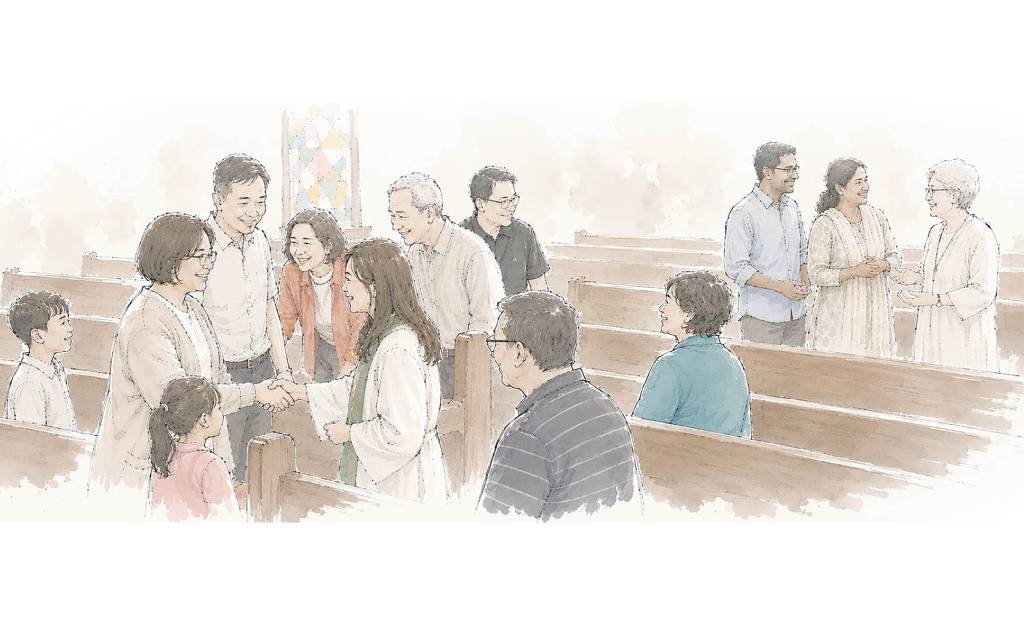
- Worship should be hospitable, cross-cultural and counter-cultural: Worship that welcomes all people challenges us to lead our lives with justice, empathy and love. However, worship must also be counter-cultural. It should not simply mirror the values of the world but confront them. It calls us to self-giving and invites us into authenticity and humility. When worship is both welcoming and prophetic, it trains marketplace leaders to live by kingdom values, not cultural trends.
We ought to be encouraged to have conversations about our worship experiences each Sunday—not to critique or evaluate, but to thrash out the meaningful words we receive and challenge one another to live them out.
Worship services end with a benediction, which is a blessing and also a sending forth. It tells us: “God is with you. Now go and live differently.” That moment is not just about comfort; it is about calling. It gives us the values and identity to resist false influences in the world. It calls us to a better way of living: a way that is honest, holy and wholly uninfluenced by anything less than the heart of God.