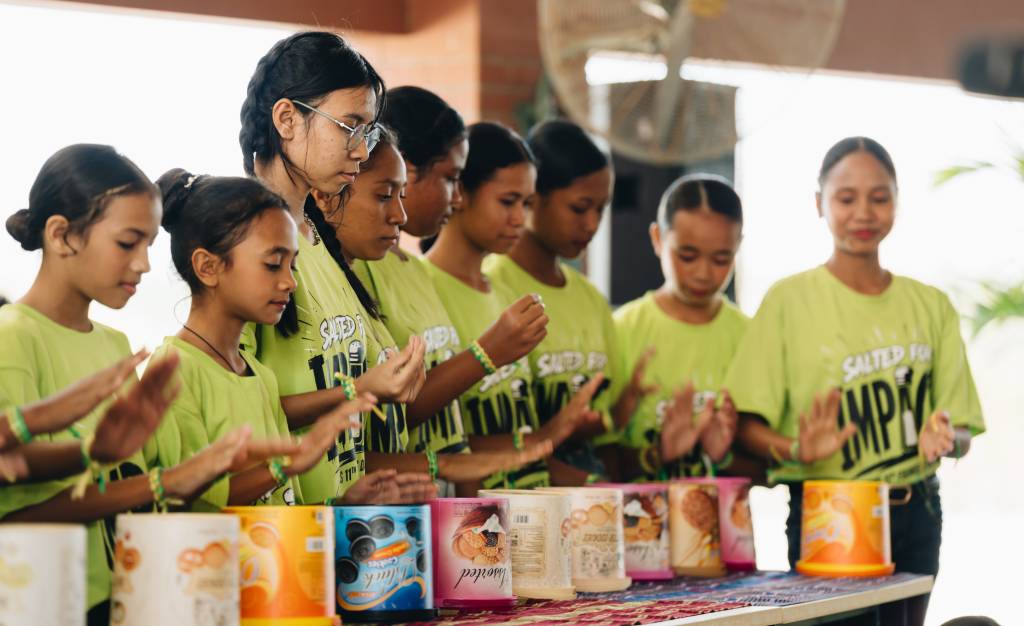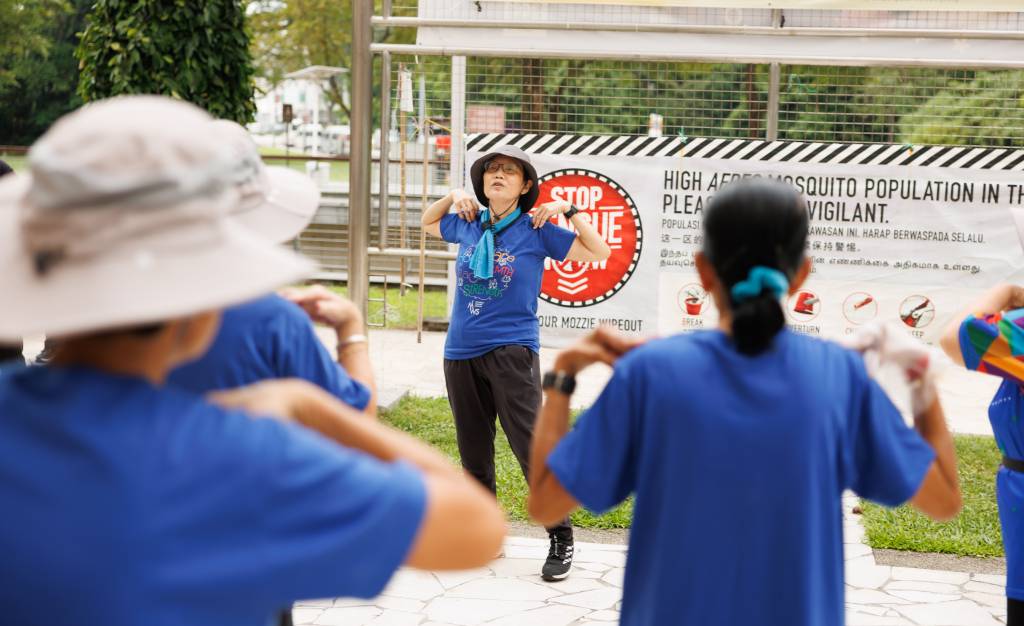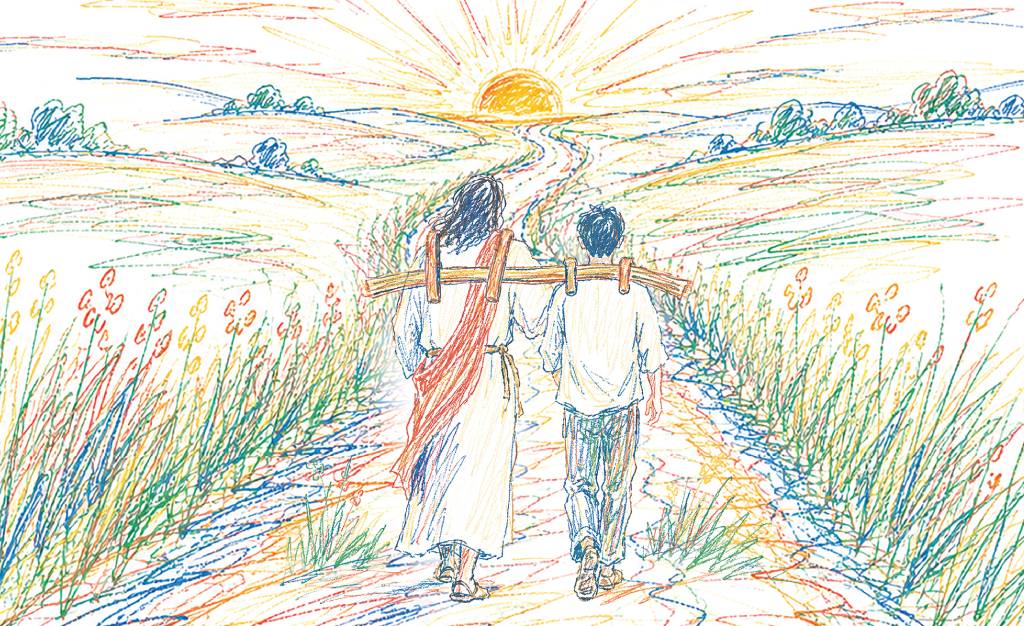

In 2025, Methodist Welfare Services (MWS) launched The Healing Nation, a national initiative inspired by the 140th Anniversary of The Methodist Church in Singapore to rally the wider community to give back. The initiative raised close to $1.42 million to bless up to 1,000 families and individuals served by other charities, social service agencies and Methodist partners. Through this, MWS hopes to empower fellow organisations to go further in meeting the needs of the community. A beneficiary from one of our Methodist partner churches shares how she was supported through this initiative.
Five cane marks were left across her eldest child’s back.
That was the moment Shannon* knew she could no longer remain passive.
For years, she and her husband clashed over his harsh approach to disciplining their children, which often involved corporal punishment. Despite her repeated efforts to address the issue, there was no lasting improvement.
When discipline leaves lasting scars
“Since they were young, my husband would cane our children whenever they misbehaved,” said Shannon, who is in her 30s. “Over the years, it became very frequent.”
The physical punishment was often paired with words that cut deeply. Their eldest child, whom her husband expected to set an example for the younger ones, bore the brunt of it.
“Sometimes, he would say very harsh things to our eldest child, like telling her she would grow up to be a useless person,” Shannon recalled. With time, the impact became evident. “My eldest child now struggles with confidence and social interactions, and has shown signs of emotional distress,” Shannon said. “Another child, who was once gentle, has become more emotionally reactive and quick-tempered.”
A breaking point
In 2024, Shannon raised her concerns with a social worker from a Family Service Centre, who advised her to apply for a Personal Protection Order (PPO) for her children.
She hesitated, knowing it would further strain an already fragile marriage. But by 2025, the situation had worsened. The canings became more severe, shifting from the buttocks to the back, with more strokes. What troubled her most was how easily these punishments were triggered by normal childhood behaviour, such as minor sibling quarrels.
That was when she decided to act. “As a mother, I couldn’t continue watching my children go through this and deteriorate further,” she said. “Even if it meant falling out with my husband, I had to do something.”
Although the PPO was not granted, the move deepened the rift between Shannon and her husband, who eventually engaged a lawyer to file for divorce. The couple is now in the midst of an acrimonious separation, while their children are undergoing counselling.
Navigating financial strain
Differences in parenting were not the only source of tension in the couple’s marriage. Finances became another fault line. After the birth of their first child, Shannon left her job to care for the family, spending six years as a full-time homemaker.
Over time, this became a point of conflict. During one heated argument, her husband accused her of not contributing financially. “After that, I told him I wouldn’t take a single cent from him anymore,” Shannon said. She later started an online business, which performed well during the pandemic but saw a decline in sales in the years that followed.
Seeking greater stability, Shannon enrolled in further studies last year to improve her employment prospects. However, studying full-time made it difficult to work, and her attempts to secure part-time roles proved unsuccessful.
With no steady income and mounting legal fees from the ongoing divorce, the strain took a toll. “I became very stressed and anxious,” she said.
Back to the fold
Around that time, Shannon’s neighbour, who attends a Methodist church, learnt about her situation and invited her along. Both her lawyer and his assistant were also Christians, with the latter even praying for her. “Though it was a difficult time, I felt fortunate that I met so many Christians who helped me along the way,” she said, tears welling in her eyes.
Looking back, she felt that God had been gently drawing her back to him. Although she grew up in a Christian family and attended church as a child, she had drifted away over time.
“When I was younger, I didn’t understand the Bible,” she said. “But now, when I read God’s word, I draw strength from it. I see its truth, and I want to live by it.” As her faith deepened, she chose to be baptised earlier this year, just a few months after returning to church.
Help at the hardest time
When church staff became aware of her situation, they helped her secure a $1,400 grant under The Healing Nation initiative. “I’m really grateful,” she said. “At the most difficult period of my life, receiving this support feels like a blessing. When I’m in a better financial position in the future, I would also want to support others going through similar situations.”
The church community has also been a steady source of strength. “Even though I’m still going through a very stressful situation, whenever I come to church, I feel so much love and peace,” she said. “It feels like a refuge for my soul. The people there remind me that I’m not alone. Though I’m facing this situation on my own, it feels like I have a family behind me.”
*Not her real name
If you would like to learn more about MWS’ work in empowering under-resourced families, visit www.mws.sg.
To donate, visit https://give.mws.sg
By the Methodist Welfare Services Communications Team. / Photos courtesy of Methodist Welfare Services